Hiring is no longer simply about collecting applications. Most companies can attract applicants by posting enough roles across job boards and career channels. The harder challenge is reaching people who are not actively applying, and that is why passive talent matters more than ever.
Passive candidates are professionals who are already employed, often perform well, and do not spend time searching job boards. Many of them are not unhappy in their current roles. They may not be looking for a change today, but they may be open to the right opportunity if it is relevant, credible, and well-timed.
Strong hiring teams understand this shift. Passive talent hiring is not about waiting for interest to appear; it is about building smarter systems that help recruiters identify suitable prospects earlier, understand their relevance, and contact them with a message that respects their time and career direction. The takeaway is clear: passive hiring works best when it is deliberate, not reactive.
Why the Best Candidates Often Do Not Apply for Jobs?
Passive candidates are important because the active job market does not show the full talent picture. LinkedIn’s guidance on passive candidates suggests that this group, along with professionals who are only casually open to change, can represent a large share of the workforce. This makes inbound applications alone insufficient for many hiring needs.
That explains why inbound applications alone rarely solve difficult hiring problems, especially in leadership, cybersecurity, data, product, engineering, and other specialist roles. The candidate a business needs may never search for that job title. They may not visit job boards. They may not upload an updated resume. They may not respond to generic hiring posts.
When recruiters rely only on active applicants, they narrow the talent pool before the search has properly begun. Passive hiring helps correct that constraint by giving recruiters better visibility, stronger context, and more control over timing. It also changes the recruitment mindset. The takeaway is that passive sourcing expands the search before it gets too narrow.
It also changes the recruitment mindset. Instead of asking, “Who has applied?” hiring teams begin asking, “Who has the right capability, even if they are not applying yet?”
How ATS Platforms Help Recruiters Find Suitable Candidates
The role of the Applicant Tracking System has changed significantly. Traditional ATS platforms were mainly designed to organize candidates after they entered the hiring funnel. They helped recruiters store resumes, track application stages, schedule interviews, and maintain hiring records.
Modern recruiting platforms are now expected to do more. Today, teams expect these systems to support proactive sourcing, enable rediscovery of existing candidates, offer analytics on sourcing effectiveness, and help manage ongoing talent relationships—not just handle incoming applications. This shift means recruiters seek platforms that provide smarter sourcing features, improved search capabilities, better analytics, and, by default, greater engagement with the talent pool.
LinkedIn Recruiter, AI-assisted search tools, candidate relationship management systems, and combined ATS-CRM platforms are helping recruiters search, rediscover, and re-engage talent in a more linked way. This does not mean every ATS has become an intelligent discovery engine. Many systems still vary widely in capability, depth, and usability.
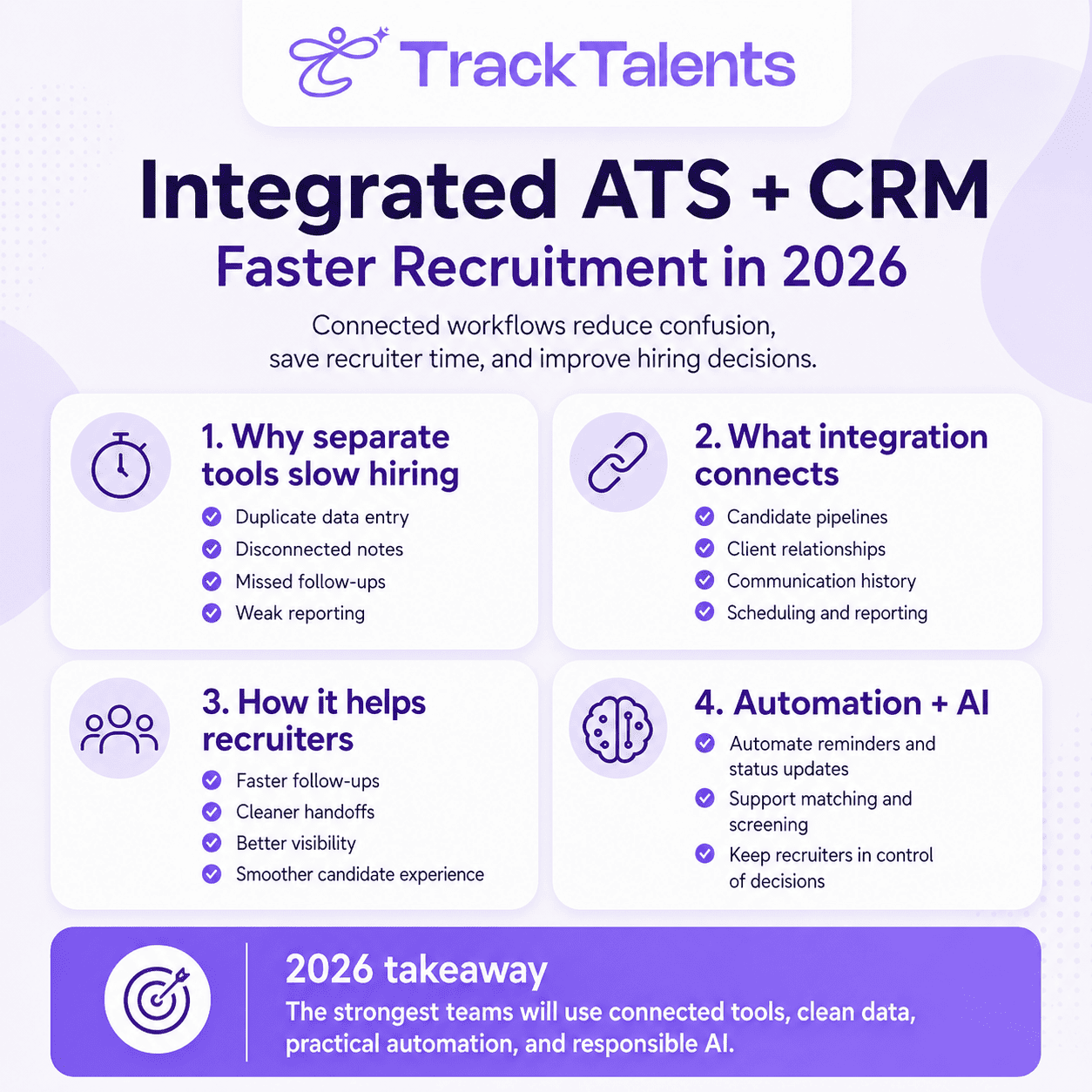
What has changed is the direction of recruitment technology. More platforms are bringing sourcing, search, CRM, analytics, and communication into the same workflow. As a result, passive talent no longer has to sit outside the main recruitment process or rely solely on individual recruiter memory. The takeaway is that modern tools are pulling discovery into the core workflow.
This changes how pipelines are built. Recruiters do not need to start from zero for every new requirement. They can return to known talent pools, review earlier interactions, identify adjacent skills, and build stronger lists before a role becomes urgent.
Why Recruiters Should Search Beyond Exact Job Titles
One of the biggest improvements in passive sourcing is the shift from literal search to contextual search. In the past, recruiters often depended heavily on exact job titles, rigid Boolean strings, and direct keyword matches. That approach still has value, but it also has limits. Job titles vary widely across companies. Two professionals may do similar work yet hold very different titles. A capable candidate may be missed simply because their profile uses different wording.
LinkedIn’s AI-assisted search lets recruiters describe what they need in natural language, while the system converts that input into structured search criteria such as skills, titles, location, and experience. It can also interpret intent and identify important skills that may not appear directly in a profile.
Real career experience rarely fits neatly into one exact title. A strong platform security candidate may have grown from infrastructure engineering. A product operations leader may have moved through analytics, process improvement, and customer success. A data strategy professional may not have “data strategist” written anywhere on their profile.
When search tools look beyond exact title matches, recruiters gain a wider and more realistic view of available talent. The takeaway is simple: context reveals more candidates than titles alone.
How Skills and Career Progression Help Recruiters Find Better-Matched Candidates
Passive hiring works best when recruiters stop thinking only in job titles and start looking at capability patterns.
Skills, project exposure, industry movement, role progression, and adjacent experience often reveal more than a headline. For example, a professional may have moved from operations to automation, from software engineering to cloud security, or from business analysis to data governance. A title may hide that growth, while the career pattern makes it clear.
LinkedIn’s recruiting guidance encourages teams to search by skills when hiring for emerging or hard-to-fill roles. That advice reflects how modern careers actually develop. Many people build expertise across functions, tools, industries, and projects before their title catches up.
This approach also improves passive sourcing. Recruiters can identify qualified candidates who may never appear in an exact-title search but still match the role’s real needs.
For example, a company hiring for a transformation role may find strong candidates among people with backgrounds in process improvement, operations technology, ERP implementation, analytics, or change management. The strongest prospect may not always carry the expected title.
That is why passive sourcing should begin with a clear understanding of capability, not just designation. The takeaway is that capability should guide the search first.
Why Boolean Search Still Matters When Recruiters Use AI
Boolean search has not disappeared. It still plays an important role in recruitment, especially when searches need precision, exclusions, combinations, or niche skill targeting.
What has changed is the level of dependency. Recruiters who once spent significant time building long strings of Boolean operators now find that AI-assisted tools can automate much of the initial sourcing logic. For example, instead of manually composing detailed search commands, recruiters can enter broad or natural-language prompts and let the platform suggest related skills, filter candidates, and refine lists. This shift means daily sourcing tasks often focus more on reviewing and ranking candidate matches, analyzing AI recommendations, and applying judgment to select the best prospects. Recruiters should adapt their workflow by learning how to leverage AI-generated results, use insights from suggested profiles to fine-tune their search, and reserve detailed Boolean searching for only the most specialized or hard-to-find criteria. This frees up time for further personalized outreach and calculated follow-up, rather than spending hours refining searches.
Recruiters no longer need to rely only on long, manually built search strings the way they once did. AI-assisted tools can now interpret plain-language prompts, suggest related skills, refine searches, and reduce some of the mechanical effort behind sourcing.
But technology does not remove the need for recruiter judgment.
Recruiters still need to decide which skills are essential, which backgrounds are transferable, which industries deserve priority, and where the search should remain broad. A tool can expand the search, but the recruiter must know what relevance actually looks like.
This proportion is especially important in passive sourcing because quality is more valuable than volume. Sending messages to hundreds of loosely matched profiles rarely creates better hiring outcomes. It often damages response rates and weakens employer reputation.
Better search only has value when it leads to better conversations. The takeaway is that precision should support outreach, not just search volume.
Why Reconnecting with Previous Candidates Is a Smarter Hiring Strategy
One of the most practical shifts in 2026 is the growing value of candidate rediscovery.
Many recruiters already have large databases filled with past applicants, earlier prospects, silver-medallist candidates, referrals, and people who were once considered but not hired. Yet in many companies, that database remains underused.
Gem describes candidate rediscovery as the ability to search and re-engage people already stored in the ATS and CRM. Eightfold describes talent rediscovery as matching past applicants and prospects to open roles after their profiles have improved.
Recruiters often overlook people they already know.
A candidate who declined an offer last year may now be receptive to a conversation. Someone who was too junior two years ago may now have the right experience. A person who was not selected for one role may be suitable for another. A candidate who was unavailable during an earlier hiring cycle may now be ready for a move.
Good systems make these second looks easier, faster, and timelier. Instead of treating every new role as a fresh search, recruiters can first review the talent already sitting inside their own ecosystem. That makes the process increasingly efficient and more respectful to candidates who have already shown interest in the organization.
That is not simply efficient. It is also more respectful to candidates who have already shown interest in the organization. The takeaway is to recheck known talent before starting over.
Why Timing Matters So Much with Passive Outreach
Passive candidates rarely respond well to hurried or generic outreach. They are usually employed, busy, and prudent about making career moves. Many are not actively searching, so the message must give them a real reason to pay attention.
Timing plays a major role here.
Recruiters may get better results when they can identify signs of professional movement, such as longer tenure in a role, newly developed skills, recent certifications, public career updates, or hiring activity within a sector. For example, outreach can be appropriate when a candidate publicly announces a new certification, completes a major project, or receives a visible promotion or award. Another valuable trigger is when someone updates their profile to reflect new responsibilities or skills. These concrete, observable signs offer ethical and timely opportunities to connect, provided they are based on public information. These signals should never be treated like hidden surveillance. Instead, use observable career information, past recruiting history, and role relevance to determine when outreach is appropriate.
Passive hiring becomes more effective when it respects context.
A message sent at the wrong time, with no connection to the candidate’s actual experience, feels like noise. A message with clear relevance, a sensible reason, and a respectful tone is more likely to open a conversation.
The goal is not to interrupt more people. The goal is to approach the right people when the conversation makes sense. The takeaway is that timing should serve relevance.
Why Candidates Now Expect Personalized Communication
A passive candidate can usually tell within seconds whether a message was written with care. Good outreach makes that care obvious and gives the candidate a clear reason to respond.
That is why personalization is no longer a nice extra. It is a basic expectation.
LinkedIn says its AI features can assist with personalized InMail messages, while broader recruiting platforms help teams use stored candidate information more effectively. But personalization should not sound overly polished, artificial, or forced. It should simply show that the recruiter understands why the person may be relevant.
Mentioning the right project type, capability area, industry exposure, or career direction makes the message more credible. A candidate may still decline, but they are more likely to respect the approach.
Personalization also protects the employer’s reputation. Passive candidates may not respond today, but they may remember whether the outreach felt thoughtful or careless. In competitive talent markets, that impression holds weight. A good message does not need to be long. It needs to be specific, honest, and relevant.
Why Internal Talent Should Be Part of Passive Sourcing Too
Passive talent sourcing should not stop with external markets. Internal employees can also be passive candidates for future roles.
Many employees are not actively applying for internal openings because they do not know what is available, do not see a clear path, or assume they will not be considered. At the same time, recruiters may overlook internal talent because they are focused on external sourcing.
LinkedIn has argued that recruiters too often overlook internal talent, and its internal candidate tools are designed to make current employees more visible within the recruiting workflow. LinkedIn’s workplace learning and talent reports also connect skills data to internal mobility, showing that firms increasingly view internal movement as part of a wider talent strategy.
Internal candidates already understand the company’s culture, systems, customers, and business setting. They may need less onboarding time and may bring institutional knowledge that external candidates do not yet have.
Including internal talent in discovery can reduce time-to-productivity, improve retention, and create stronger career pathways within the organization.
Passive hiring should therefore include both external prospects and internal employees who may be ready for their next move.
Why Compliance and Data Protection Must Be Part of Passive Hiring
Any serious passive talent strategy must respect privacy, consent, data administration, and compliance.
The UK Information Commissioner’s Office says employers and recruiters must understand their obligations under data protection law when handling candidate information. It has also issued guidance on the use of AI in recruitment.
This becomes especially important when recruiters source from external platforms, store profile data, enrich candidate records, re-engage people from old databases, or use AI-supported screening and matching tools.
Recruiters need a lawful basis for handling candidate information. They also need fair data practices, clear retention rules, open practices, and proper controls over how candidate information is stored and used. In practical terms, this means recruiters should: obtain explicit consent from candidates before storing or processing their data; clearly explain how and why information will be used; document how long candidate details will be retained and set reminders to delete data that is no longer needed; restrict access to personal data only to appropriate team members; and guarantee all data is stored securely, whether on external platforms or internal systems. Carrying out these steps helps to guarantee compliance and establishes trust with candidates.
Responsible procurement is not simply about avoiding regulatory trouble. It likewise shapes trust.
Passive candidates are more likely to respond positively when communication appears professional, relevant, and respectful. They are less likely to engage when outreach seems invasive, careless, or poorly informed.
As recruitment technology becomes more powerful, responsible use becomes more important.
How Data Helps Recruiters Make Better Passive Hiring Decisions
Passive recruitment is becoming easier to measure.
Combined ATS, CRM, and sourcing tools now give teams better visibility into response rates, source quality, re-engagement performance, pipeline health, candidate movement, and conversion across stages.
Without measurement, passive hiring can feel vague. Recruiters may know they are doing outreach, but they may not know which searches are actually producing conversations, which messages are working, which talent pools are worth revisiting, or which sources are creating stronger candidates.
Measurement helps improve that process.
Once recruiters can see which searches led to productive replies, which rediscovered candidates reached interviews, and which outreach approaches performed better, they can adjust their strategy with greater confidence.
Data does not replace recruiter instinct. It tests whether that instinct is working.
Over time, passive hiring becomes less dependent on individual memory and more repeatable across teams, regions, and recurring role categories.
How to Measure Success in Passive Candidate Hiring
The companies that perform best in passive talent hiring are not waiting for great people to knock on the door. They are building readiness before a vacancy becomes urgent.
In 2026, that readiness comes from better search, stronger rediscovery, more relevant outreach, greater internal talent visibility, stronger compliance discipline, and clearer measurement.
To put these principles into action, recruiters can begin by reviewing their current sourcing tools and workflows, identifying opportunities to re-engage known candidates, coordinating more closely with internal talent teams, and ensuring that privacy and data protection continue at the forefront of every process. Taking small steps in these areas can help create a more proactive, high-impact approach to passive talent hiring.
Passive recruiting is not about sending more messages or collecting more profiles. It is about knowing who may be suitable, why the match makes sense, and when a conversation is worth starting.
When this happens consistently, passive hiring stops feeling like luck. It becomes a structured advantage.
The real value of passive talent hiring is not just access to more people. It is access to better-aligned people before the market becomes crowded, urgent, or reactive. That is why passive talent matters more than ever.