
A company’s career Page is no longer a quiet page where jobs sit until someone remembers to update them.
For many candidates, it is the first real hiring experience with the employer.
If the page is slow, outdated, confusing, or difficult to use on a phone, candidates may leave before applying. That means the career portal is not simply a design feature. It is part of recruitment performance.
An ATS-integrated career portal connects the company’s career site with its applicant tracking system. Jobs, applications, candidate records, interview stages, communication, and analytics work from the same hiring system.
This helps recruiters keep job information accurate. It helps candidates apply with less friction. It also helps employers understand which roles, pages, and channels are working.
In modern hiring, a career portal is not just where jobs are listed. It is where candidate trust begins.
What Is an ATS-Integrated Career Portal?
An ATS-integrated career portal is a career site that connects directly with an applicant tracking system.
Instead of asking recruiters to manually copy job openings from the ATS to the website, the portal pulls live job data from the system.
This can include:
- Job title
- Location
- Work model
- Department
- Job description
- Application form
- Screening questions
- Job status
- Candidate source
- Application stage
- Candidate communication
When the ATS is the source of truth, the career portal stays more accurate.
TrackTalents, for example, lists branded career site, job postings, resume management, job pipelines, customizable workflows, integrated calendar, and recruitment communication features as part of its ATS functionality. Its branded career site feature is positioned to help employers advertise jobs on their website and allow job seekers to access openings from anywhere. Other well-known solutions, such as Greenhouse and Lever, also provide ATS-integrated career portals with features like customizable career pages, automatic posting from the ATS, candidate pipelines, and built-in analytics. These tools align with industry standards and offer employers a wide range of options to build a connected, user-friendly hiring process.
The value is simple: recruiters manage jobs in one place, and candidates see cleaner information on the front end.
Why Career Portals Matter in Hiring
A candidate may first discover a job through Google, LinkedIn, a job board, social media, an employee referral, or an email alert. But many candidates still visit the company’s career page before applying.
They want to know:
- Is this role still open?
- Is the company credible?
- What does the job actually involve?
- Is the application process simple?
- Is the company clear about location and work model?
- Will I receive updates after applying?
- Does this employer look organized?
Greenhouse’s Candidate Experience Report found that 79% of candidates said they would reapply to a company if they received feedback after an interview, even if they were not offered the job. This shows that candidate experience directly affects future hiring trust.
A career portal cannot fix every hiring problem. But it can create a smoother start.
Live Job Updates Keep Career Pages Accurate
A recruiter closes a role in the ATS, but the job still appears on the company website. A job board shows one version of the role, while the career site shows another. A referral link points to an expired opening. A candidate applies only to learn that the role has already been filled.
These issues damage trust.
An ATS-integrated career portal reduces this risk because job updates come from the hiring system.
When recruiters update the job inside the ATS, the career portal can reflect the same status. This helps reduce:
- Expired job listings
- Broken application links
- Duplicate job pages
- Outdated job descriptions
- Wrong locations
- Closed roles still appearing online
- Conflicting information across channels
Candidates may not know the technical reason behind a clean job page. But they notice when the process feels organized.
Mobile-Friendly Career Portals Increase Application Completion
Many candidates browse jobs on their phones. They may click a job link from a search result, email, WhatsApp, LinkedIn, or a referral message.
If the job page is difficult to read or the form is hard to complete, they may abandon the application.
A mobile-ready career portal should include:
- Fast page loading
- Clear job titles
- Brief paragraphs
- Easy resume upload
- Simple application forms
- Clear apply buttons
- Saved progress where possible
- Readable text lacking zooming
- Mobile-friendly screening questions
- Confirmation after submission
A desktop page that merely shrinks to fit a smaller screen is not enough.
Mobile friction seems heavier because candidates may be applying during a short break, on a commute, or after work. Long forms, login barriers, broken uploads, and repeated data entry can quickly reduce applications. To improve the mobile application experience, employers can enable features such as social logins (Google, LinkedIn, or Apple accounts), autofill for basic fields like name and email, and mobile-friendly document upload options. These optimizations help candidates move through the application faster and with fewer interruptions.
The best career portals make applying feel simple without removing the information recruiters need.
ATS Integration Improves Communication with Applicants
Candidates remember silence.
A delayed decision may be understandable. No update at all feels careless.
An ATS-integrated career portal can support automated communication at key stages of the hiring process.
This may include:
- The application received confirmation
- Screening-stage update
- Interview invitation
- Interview reminder
- Assessment instruction
- Rejection email
- Offer-stage message
- Talent community follow-up
The goal is not to replace human communication. It is to reduce unnecessary silence.
Recruiters should still personalize important messages, especially for candidates who have been interviewed. But automated status updates can prevent candidates from feeling disregarded after applying.
Better communication also helps recruiters. When candidates know what happens next, recruiters receive fewer repeated follow-up emails.
Career Portals Can Improve Google Job Visibility
A career portal should not work only for people who already know the company name.
Many candidates search by job title, skill, location, industry, work model, or salary. That makes search visibility important.
Google Search Central explains that adding Job Posting structured data to job posting pages can make those pages eligible to appear in a special job search experience in Google Search results.
A well-built job page can help search engines comprehend:
- The job titles
- Hiring organization
- Location
- Employment type
- Job description
- Date posted
- Valid-through date
- Salary range, where provided
- Remote or on-site status, where marked properly
For recruiters and HR teams, this means the career portal should not be treated as a basic listing page. Each job page should be clear, structured, and search-friendly.
What Makes a Job Page SEO-Friendly?
A strong job page should be written for both candidates and search engines.
It should include:
- Clear job title
- Specific location
- Work model, such as remote, hybrid, or on-site
- Department or function
- Main responsibilities
- Must-have requirements
- Good-to-have requirements
- Salary range where required or available
- Benefits summary
- Application steps
- Equal opportunity statement, where applicable
- Job posting structured data
- Clear closing date, where relevant
Avoid vague titles such as “Rockstar Sales Leader” or “Marketing Ninja.” Candidates search for real job titles.
Also, avoid keyword stuffing. A job page should be clear enough for candidates to quickly understand the role.
AI Can Improve Job Content, But Recruiters Should Review It
AI can help hiring teams improve job content. It can simplify long job descriptions, remove repeated phrases, suggest clearer headings, and make role expectations easier to read.
But AI should not be allowed to create vague, inflated, or generic job ads.
A good AI-supported job description should still be reviewed by a recruiter or hiring manager for:
- Accuracy
- Role scope
- Salary details
- Work model
- Required skills
- Legal wording
- Accessibility
- Fairness
- Candidate clarity
The EEOC has acknowledged the increasing use of AI and machine learning in job advertising, recruiting, and hiring decisions as an enforcement priority. This means employers should use AI carefully and keep human review in the process. To help ensure AI use in hiring remains compliant and fair, HR teams can take practical steps such as conducting scheduled audits of AI-powered hiring processes, performing bias checks on AI-generated job descriptions, and providing training for recruiters on the responsible use of AI tools.
AI can help with wording. It should not invent requirements, exaggerate culture, or make the role sound better than it is.
Career Portal Analytics Help Recruiters Fix Real Problems
An ATS-integrated career portal gives recruiters useful data.
Instead of guessing why a role is not attracting candidates, teams can review the funnel.
Useful analytics may include:
- Job page views
- Apply clicks
- Completed applications
- Candidate drop-off rate
- Source of candidates
- Device type
- Time spent on job pages
- Form abandonment point
- Applications by location
- Applications by role
- Candidate quality by source
Appcast’s 2025 Recruitment Marketing Benchmark Report found that overall application rates climbed in and ended the year at 6.1%, while cost-per-application rose only 4.8% over the year. This shows why recruiters should track application behavior, not just job ad views.
Analytics can show where the problem sits.
For example:
If many people view a job but few click Apply, the job description may be unclear.
If many people start the form but leave midway, the application process may be too long.
If mobile users abandon more often, the mobile app flow may need improvement.
If one source sends many applicants but few qualified candidates, source quality may be poor.
If candidates drop after screening questions, the questions may need review.
Good analytics turn the career portal into a hiring improvement tool.
Talent Communities Help Employers Stay Connected
Not every qualified candidate is ready to apply today.
A candidate may like the company but not see the right role. Another may be interested but is waiting for a remote opening. Someone else may want job alerts for a specific function or location.
A connected career portal can support this through:
- Talent community sign-ups
- Saved job alerts
- Location-based alerts
- Function-based alerts
- Referral links
- Candidate profile creation
- Future-role interest forms
- Personalized job suggestions
This helps employers build a warm talent pool rather than starting from scratch each time a job opens. To maximize the long-term value of their talent communities, employers can keep candidates engaged through periodic newsletters featuring company updates, hiring tips, or career development content. Targeted job alerts about new and relevant openings can encourage passive candidates to stay connected. Hosting occasional online events or webinars for talent community members, sending personalized follow-up messages, and sharing insights into workplace culture are additional ways to nurture ongoing interest and ensure candidates stay engaged until the right opportunity arises.
For staffing agencies and high-volume employers, this matters even more. A candidate who is not right for the role today may be suitable for a future role.
Privacy and Candidate Trust Must Be Built into the Portal
Candidates share personal information when they apply. This may include resumes, contact details, work history, salary expectations, identification documents, and sometimes sensitive information.
A career portal should make information handling clear.
The UK Information Commissioner’s Office says its recruitment and selection guidance is designed to help employers and recruiters understand their data protection obligations when handling candidate personal information.
A trustworthy career portal should include:
- Transparent privacy notice
- Consent language where needed
- Secure application forms
- Role-specific access controls
- Data retention rules
- Candidate data deletion process
- Secure resume storage
- Accurate ATS privacy settings
- Clear explanation of how data is used
An easy application process loses value if candidates feel unsure about where their data goes.
Privacy is not solely a legal issue. It is part of candidate confidence.
Accessibility Should Be Part of Career Portal Design
A career portal should be easy to use for as many candidates as possible.
Accessibility matters for candidates using screen readers, keyboard navigation, captions, assistive tools, or lower-bandwidth devices.
Recruiters and HR teams should check whether the portal supports:
- Clear page structure
- Clear font sizes
- Keyboard navigation
- Descriptive text for meaningful images
- Proper color contrast
- Clear form labels
- Error messages that explain what to fix
- Captions for videos
- Simple language
- Mobile access
Accessibility helps more people complete the application process. It also shows that the employer takes inclusion seriously from the first step.
How ATS-Integrated Career Portals Support Recruiters
A connected career portal helps recruiters by reducing repeated admin work.
Recruiters can:
- Publish jobs from the ATS
- Update job status once
- Collect applications in one system
- Track candidate source
- Review candidate profiles faster
- Send automated updates
- Move applicants through stages
- Coordinate with hiring managers
- Report job performance
- Build talent pools
Without integration, recruiters may need to manage jobs across the website, job boards, email, spreadsheets, and ATS records. That increases errors.
With integration, the hiring workflow becomes cleaner.
How ATS-Integrated Career Portals Support Candidates
Candidates benefit when the process is simple and clear.
A good career portal helps candidates:
- Find relevant roles quickly
- Understand the job clearly
- Apply from mobile or desktop
- Upload a resume easily
- Receive confirmation after applying
- Know what happens next
- Save job alerts
- Join a talent community
- Trust how their data is treated
The best candidate experience is not built through fancy design alone. It is built through clarity, speed, honesty, and follow-up.
What Employers Should Check Before Building or Updating a Career Portal
Before choosing or improving an ATS-integrated career portal, employers should review the needs of both recruiters and candidates.
Job Accuracy
- Does the portal pull live job data from the ATS?
- Are closed roles removed automatically?
- Are job descriptions consistent across channels?
- Can recruiters update jobs without developer help?
Candidate Experience
- Is the application form succinct and clear?
- Does it work well on mobile?
- Can candidates upload resumes easily?
- Do candidates receive confirmation?
- Are the following steps explained?
Search Visibility
- Does each job have its own search-friendly page?
- Is the structured data in the job posting added correctly?
- Are job titles clear?
- Are the location and work model easy to understand?
- Are expired jobs handled properly?
Recruiter Workflow
- Do applications enter the ATS automatically?
- Are sources tracked?
- Can recruiters send updates from the system?
- Can hiring managers review candidates easily?
- Are reports available?
Privacy and Security
- Is candidate data stored securely?
- Is the privacy notice clear?
- Are access controls in place?
- Are retention rules defined?
- Can candidate data be updated or removed where required?
Analytics
- Can the team track page views, apply clicks, completion rates, and drop-off?
- Can reports show source quality?
- Can recruiters compare mobile and desktop behavior?
- Can weak job pages be identified quickly?
Common Career Portal Problems Employers Can Fix
Many career portals fail for simple reasons.
Outdated Jobs
Closed roles should not stay live. Candidates lose trust when they apply to expired jobs.
Long Application Forms
Ask only for information needed at that stage. Long forms reduce completion.
Weak Mobile Experience
A mobile career page should not feel like a desktop page squished onto a mobile screen.
Generic Job Descriptions
Candidates need role clarity, not broad company language.
Poor Communication
Application confirmation and status updates should be built into the process.
No Source Tracking
Recruiters need to know where strong candidates came from.
Hidden Privacy Details
Candidates should understand how their data will be processed and stored.
Functional Framework for an ATS-Integrated Career Portal
A strong career portal ought to follow a clear workflow.
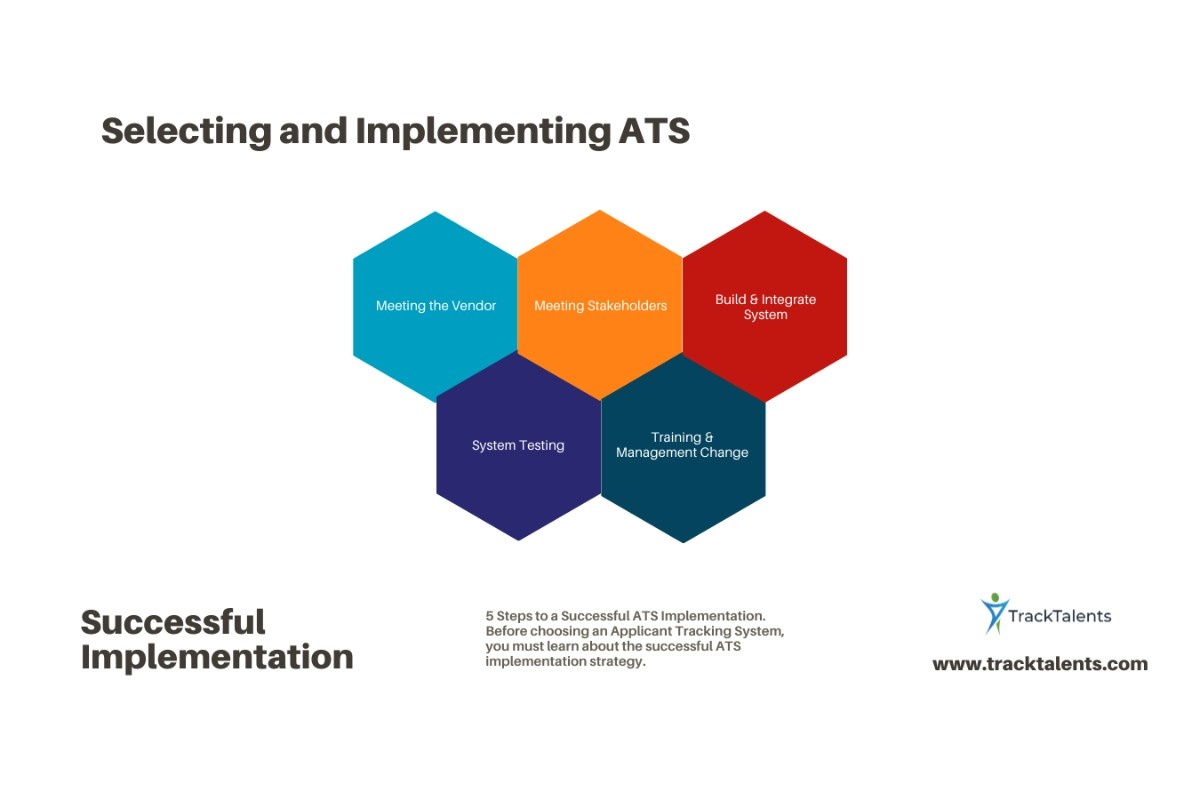
Tips for Rolling Out a New ATS-Integrated Career Portal
Rolling out a new ATS-integrated career portal requires planning to reduce disruption and help your HR and recruiting teams adapt smoothly. Examine the following steps for a successful rollout:
– Start with a pilot: Select one department or location to test the new portal, collect feedback from recruiters and candidates, and identify issues before a company-wide launch.
– Prepare your data: Review existing job listings and candidate records to verify accuracy and completeness before migration.
– Communicate the change: Notify your HR, recruiting, and hiring manager teams about the deployment schedule, new features, and expected benefits. Share guides or quick reference materials for new workflows.
– Train the team: Offer brief training sessions or instructional guides to make certain everyone knows how to post jobs, review candidates, and use analytics features.
– Run parallel systems if needed: During the transition, keep the old portal available for a short period to catch any neglected applications and help teams adjust.
– Gather feedback early: Encourage recruiters and candidates to share their experiences during the pilot phase so you can address issues quickly.
– Phase in additional features: After the initial launch is stable, launch new features such as talent community sign-ups, advanced analytics, or automated candidate communications in stages.
Taking a phased approach helps HR teams manage change with fewer surprises and maintain a consistent candidate experience throughout the transition.
1. Create the Job in the ATS
The recruiter or HR team enters the job title, location, department, work model, description, and requirements.
2. Publish to the Career Portal
The job appears on the company career site with precise information.
3. Add Structured Data
The job page includes well-structured Job Posting data to improve search visibility.
4. Make Applying Simple
Candidates can apply with a clear form, easy resume upload, and mobile-friendly steps.
5. Send Confirmation
The candidate receives an application confirmation and next-step information.
6. Track Source and Status
The ATS records where the candidate came from and moves them through the hiring stages.
7. Communicate Updates
Recruiters send role-specific messages and automated status updates where appropriate.
8. Review Analytics
The hiring team checks traffic, applications, drop-off, source quality, and role engagement.
9. Improve the Portal
Weak job pages, long forms, and poor mobile steps are fixed based on data.
This turns the career portal into an active hiring channel rather than a static web page.
Frequently Asked Questions
What is an ATS-integrated career portal?
An ATS-integrated career portal is a company career site that connects directly with an applicant tracking system. It allows jobs, applications, candidate data, communication, and hiring stages to flow through a single connected workflow.
Why is ATS integration important for career portals?
ATS integration helps keep job listings accurate, lowers manual posting, sends applications to the hiring system, tracks candidate sources, and supports better communication.
How does a career portal improve candidate experience?
A good career portal helps candidates find roles, read clear job descriptions, apply easily, receive confirmation, understand the next steps, and trust that their data is handled.
Can a career portal help jobs appear in Google Search?
Yes. Google says that job pages with properly structured Job Posting data may be eligible for improved job search results in Google Search. The job page must also follow Google’s job posting guidelines.
Why is mobile design important for career portals?
Many candidates discover and apply for jobs on their phones. A mobile-friendly career portal reduces friction by making job pages more readable, forms shorter, buttons clearer, and resume uploads easier.
How can recruiters measure career portal performance?
Recruiters can track job page views, apply clicks, completed applications, drop-off rate, source quality, mobile behavior, and candidate conversion by role.
Should AI write job descriptions for career portals?
AI can help improve job description clarity, but recruiters and hiring managers should review every final version for accuracy, fairness, role scope, and compliance.
Final Thoughts
An ATS-integrated career portal is no longer only a place to list openings.
It is part of the hiring engine.
It helps candidates find accurate jobs, apply with less effort, receive clearer updates, and trust the employer earlier in the process. It helps recruiters reduce manual work, track sources, improve communication, and understand at which stage candidates drop off.
The best career portals combine:
- Live ATS job data
- Clear job pages
- Mobile-friendly applications
- Google-ready structured data
- Candidate communication
- Source tracking
- Talent communities
- Privacy safeguards
- Useful analytics
A company’s career portal often creates the first serious impression of its hiring process.
When that experience is clear, current, and connected, stronger candidates are more likely to apply.