A staffing firm can send a shortlist within hours and still lose the client.
The candidates may be strong, but the onboarding documents arrive late. A license expires during the assignment. Timesheets need repeated corrections. The invoice does not match the approved hours. Account managers cannot provide the client with a clear report without requesting data from three departments.
Submission speed still matters. It is simply no longer enough to prove that a staffing partner can manage a growing workforce.
Clients increasingly experience a staffing supplier through its operations. They notice how accurately workers are onboarded, how quickly issues are resolved, how well records are maintained, and whether invoices can be trusted. They also want visibility into worker status, compliance, costs, and service performance.
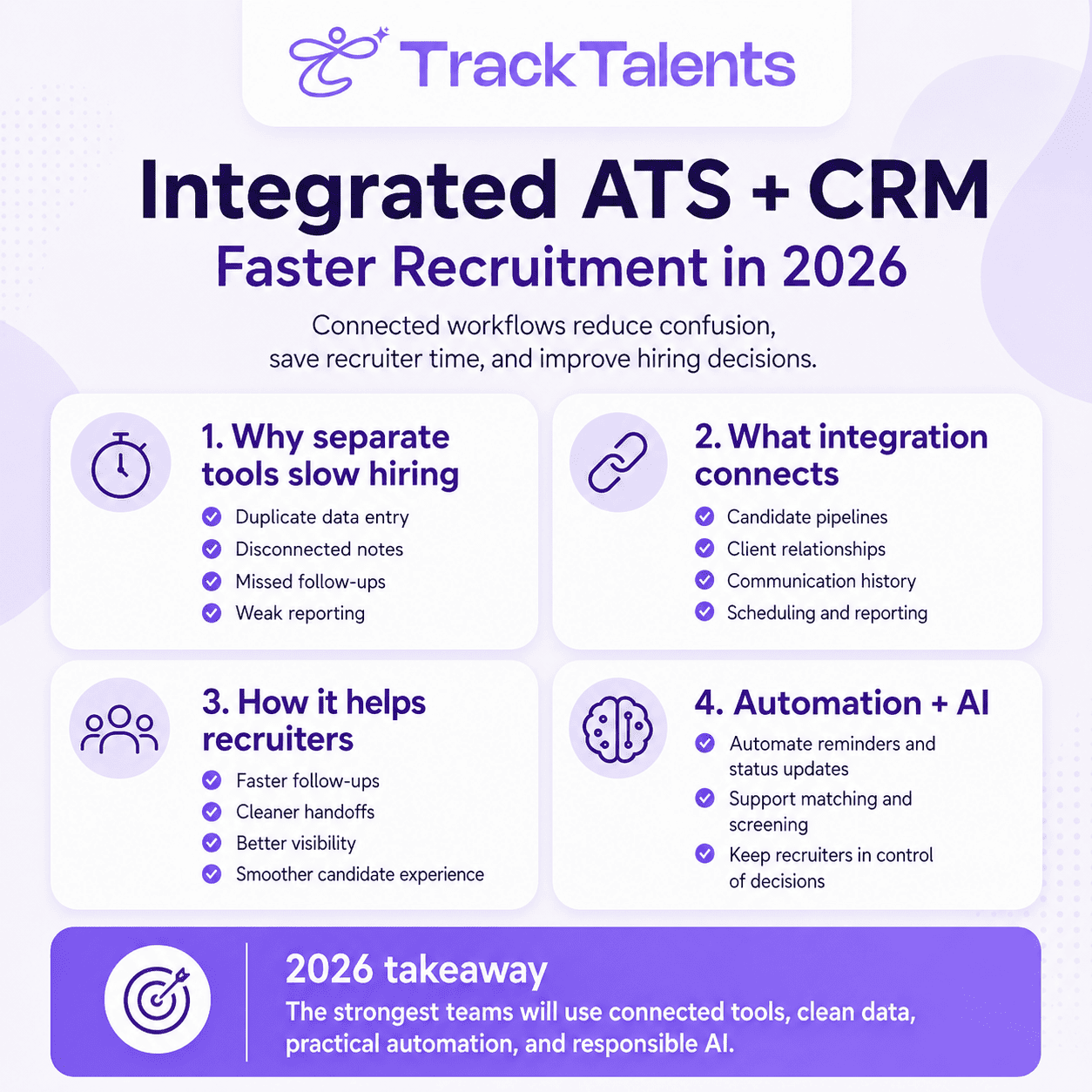
This changes the role of staffing technology. An applicant tracking system is no longer useful only because it stores resumes and jobs. When connected with onboarding, credentialing, time and attendance, payroll, billing, and reporting, it becomes part of the firm’s operating structure.
The firms that gain the most from technology are not those that add the most AI features. They are the ones who use connected systems to remove recurring errors from the parts of the service that clients and workers experience directly.
Operational Reliability Has Become Part of the Staffing Offer
A traditional staffing pitch may focus on:
- Candidate reaches
- Recruiter experience
- Industry knowledge
- Speed of submission
- Placement volume
- Competitive rates
These points still influence purchasing decisions. However, a client hiring large numbers of temporary workers, contractors, consultants, nurses, industrial staff, or project professionals also needs to know whether the supplier can operate consistently.
The client may ask:
- Can the firm confirm worker readiness before the start date?
- Are credentials and work rights current?
- Who follows up when documents are missing?
- How are timesheets approved?
- Can different overtime and billing rules be handled?
- How quickly are invoice disputes resolved?
- Can the supplier report by site, department, role, or cost center?
- What happens when the program expands?
- Is there a clear record of approvals and changes?
These are not back-office details. They affect service continuity, legal exposure, worker experience, cost control, and the client’s confidence in the supplier.
Technology providers serving the staffing industry increasingly present recruiting and back-office activity as a connected process. Bullhorn, for example, describes workflows that combine time and expense management with reporting and the wider system of record. Beeline similarly positions its contingent workforce data as a single, audit-ready source that covers contracts, budgets, timesheets, onboarding, and offboarding.
The important point is not that one product solves every operational problem. It is clear that staffing firms can no longer manage growth safely when critical information remains scattered across spreadsheets, folders, email chains, and individual memory.
Compliance Begins Before the Worker Joins an Organization
Staffing compliance varies by role, location, industry, client, and assignment type.
A worker file may need:
- Identity documents
- Work-authorization records
- Background checks
- Professional licenses
- Training certificates
- Medical or health-clearance records
- Drug-screening results
- Client-specific forms
- Policy acknowledgments
- Insurance documents
- Tax and payroll information
In healthcare staffing, an expired clinical license can prevent a worker from starting. In industrial staffing, missing safety training may create operational risk. In finance, government, education, or regulated technical work, the client may require additional checks before granting access.
When these items are managed through separate tools, teams can lose track of:
- Which documents are still missing
- Which version is current
- Who reviewed the record
- When a credential expires
- Which client rule applies
- Whether the worker is cleared to begin
A connected onboarding and compliance process can route documents, assign tasks, record approvals, and flag missing information. Xemplo’s integration materials, for example, describe connected workflows covering onboarding, HR compliance, timesheets, billing, payroll, and reporting.
Automation can improve control, but it does not replace informed review. A platform may confirm that a document was uploaded and remains within its recorded expiry date. A qualified person may still need to check whether the document is genuine, relevant, complete, and acceptable for that assignment.
Ongoing Credential Monitoring Protects Active Assignments
Worker compliance does not end after onboarding.
Licenses expire. Training needs renewal. Client policies change. Work authorization documents may need to be updated. A contractor may move to a different site with different requirements.
This makes continuing monitoring as important as the original check.
A strong process should help the staffing firm identify:
- Credentials approaching expiry
- Documents already expired
- Workers assigned without a required item
- Client requirements added after placement
- Records awaiting human review
- Renewals that have been requested but not completed
- Assignments that may need to be paused
The firm should also define clear responsibilities.
An alert has limited value when nobody owns the next action. Operations teams need agreed rules covering:
- Who receives the warning
- When the worker is contacted
- When the recruiter or account manager is informed
- When the client needs to be notified
- Whether the person can continue working
- What evidence closes the alert
Modern automation tools can also run checks across staffing records before errors reach payroll or the client. Bullhorn’s current digital-worker materials describe automated reviews of placement, pay, billing, and compliance data, including checks for missing information and rate-card errors.
The commercial value comes from preventing disruption rather than merely recording it after the event.
Accurate Time Capture Supports Payroll, Billing, and Trust
Timesheets appear simple until a staffing firm manages hundreds or thousands of workers across clients with different rules.
One client may approve hours every Friday. Another may use a two-stage approval process. Some assignments include night differentials, weekend rates, holiday pay, meal rules, overtime thresholds, or separate bill-and-pay rates.
Manual time capture can create several problems:
- Workers submit hours in different formats
- Approvers overlook emails
- Recruiters chase missing timesheets
- Payroll teams re-enter data
- Overtime is calculated incorrectly
- Invoices do not match client records
- Adjustments move into the next pay cycle
Each issue may look small on its own. Together, they can delay worker pay, hold up invoices, increase administrative costs, and damage confidence.
A structured time-and-expense process gives workers one route for submission and clients one route for approval. It also connects approved hours to payroll and billing, eliminating the need for teams to repeat the same data entry.
Bullhorn’s back-office materials describe unified time and expense processes, configurable time rules, and reporting connected to the system of record.
The practical benefits include:
- Fewer missing timesheets
- Clear approval ownership
- Better visibility into outstanding hours
- More consistent rule application
- Faster payroll preparation
- Cleaner invoicing
- Easier investigation of disputes
Timesheet automation is valuable because it improves the reliability of the entire pay-and-bill chain.
Billing Accuracy develops the Client’s View of the staffing Firm
A staffing supplier may deliver strong candidates and still weaken the account through poor invoicing.
Common billing problems include:
- Incorrect rates
- Unapproved overtime
- Duplicate charges
- Missing purchase-order details
- Wrong cost centers
- Unclear expense claims
- Hours that do not match client records
- Delayed credits
- Repeated invoice revisions
Finance teams remember suppliers that regularly create extra work.
The cost is higher than the cost of a delayed payment. Frequent corrections can lead clients to question the firm’s broader controls. They may increase approval checks, reduce assignment volume, or favor another supplier during the next review.
A stronger billing workflow connects:
- Contract terms
- Pay rates
- Bill rates
- Approved time
- Expenses
- Overtime rules
- Purchase orders
- Payroll records
- Client invoices
- Margin reporting
Automated checks can help identify mismatches before an invoice is issued. This is especially useful when the firm manages several rate structures or operates across states and countries.
Clean billing supports:
- Faster approvals
- More predictable cash flow
- Fewer disputes
- Better margin visibility
- Stronger client confidence
Billing accuracy is therefore part of client service, not simply a finance function.
Detailed Reporting ensures Delivery evidence to clients
Enterprise and high-volume clients usually want more than a monthly placement count.
They may request information on:
- Open and filled roles
- Submission and interview activity
- Time to fill
- Worker starts
- Attendance
- Assignment completion
- Attrition
- Credential status
- Timesheet approval
- Overtime
- Spend
- Invoice status
- Diversity measures that are lawful and relevant
- Supplier performance against agreed service levels
A staffing firm relying on manual reports may struggle to provide current information. Teams may spend hours reconciling spreadsheets, checking records, and resolving discrepancies across different versions of the same number.
An integrated reporting structure gives leadership and clients a more consistent view. Beeline describes the value of a single source of truth and an audit-ready repository for contingent workforce information. Its integration materials also emphasize accurate data movement across systems and automated processes.
Reporting should answer business questions rather than simply fill a dashboard.
For example:
- Which locations have the highest worker turnover?
- Which job groups take the longest to fill?
- Where is overtime increasing?
- Which clients create the most manual billing exceptions?
- Which sources produce workers who complete assignments?
- Which accounts have weak margins?
- How many workers have credentials due to expire?
- Which managers delay timesheet approval?
The value of reporting lies in what the firm changes after seeing the data.
Nearshore Staffing should not overlap Business hours
Nearshore staffing and outsourcing place work in a nearby country, often with overlapping business hours.
For companies in the United States and Canada, Latin American locations are frequently considered because many teams can collaborate during the same working day.
The benefits can include:
- Shared or similar time zones
- Real-time meetings
- Faster issue resolution
- Access to wider talent pools
- Geographic proximity
- Competitive labor costs
- Support for complex or specialized work
Research on Latin American shared-services operations found that the leading advantages cited over other regions were same-time-zone support and talent quality. It also found that 84% of the surveyed Latin American operations supported North America.
Research published in 2026 on global software development also found advantages of nearshore arrangements for communication-intensive work, including overall success, quality, schedule performance, and fewer communication problems. The study focused on software-development outsourcing, so its findings should not automatically be applied to every staffing model, but they support the broader value of time-zone alignment when collaboration is important.
Nearshore strategy should not be reduced to finding the least expensive labor market.
A staffing firm should also assess:
- Skill availability
- Language ability
- Employment laws
- Worker classification
- Data protection
- Tax and payroll rules
- Client security requirements
- Communication standards
- Management capacity
- Local recruiting competition
- Employee and contractor experience
A lower rate does not create value if quality problems, turnover, communication gaps, or compliance failures increase the total cost.
The Right Delivery Model Depends on the Quality of the work
Staffing firms may combine local, nearshore, offshore, remote, on-site, and hybrid delivery models.
The right model depends on the role and the way the client operates.
Local or onsite delivery may suit:
- Work requiring physical presence
- Roles with local licenses
- Site-based industrial work
- Direct patient or customer care
- Positions requiring local market knowledge
- Assignments with strict security controls
Nearshore delivery may suit:
- Work needing strong time-zone overlap
- Client-facing remote roles
- Agile development
- Technical support
- Shared services
- Finance and operational functions
- Teams requiring frequent live collaboration
Offshore delivery may suit:
- Work with clear handovers
- Round-the-clock support
- Standardized processes
- Large talent requirements
- Tasks that can follow asynchronous workflows
- Roles where specialist talent is concentrated elsewhere
The decision should be guided by service quality, collaboration needs, risk, cost, and talent availability rather than geography alone.
Quality Standards Must Travel and align with the Delivery Model
Expansion can expose differences in how recruiters assess, onboard, and manage workers.
One team may verify skills thoroughly. Another may rely mainly on keywords. One region may carefully document candidate communication. Another may keep key details in personal messages. These differences create an uneven client experience.
A scalable staffing firm needs common operating standards covering:
- Candidate qualification
- Skill verification
- Interview notes
- Right-to-work checks
- Credential review
- Client submission
- Onboarding
- Communication
- Timesheet approval
- Worker support
- Assignment completion
- Offboarding
The standards should allow for local legal and market differences without weakening the core service.
Technology can make the steps visible and repeatable. It cannot decide what quality means for the firm. Leadership must define that standard and train people to apply it.
Talent repository will always reduce Last minute scrambling
Reactive recruiting begins after the requisition arrives.
A pipeline-based model begins earlier by identifying repeat roles, likely demand, available candidates, and supply constraints.
Useful staffing pipelines may include:
- Former contractors
- Previous placements
- Silver-medalist candidates
- Referred candidates
- Workers approaching assignment completion
- Applicants who were unavailable earlier
- Candidates with frequently requested credentials
- Talent grouped by region or shift
- People open to future contact
The ATS or recruitment CRM should help recruiters search and refresh these groups.
A useful pipeline is not a large list of old resumes. Candidate information needs to be current:
- Contact details
- Skills
- Location
- Availability
- Pay expectations
- Work-authorization status
- Certifications
- Assignment history
- Communication preferences
- Follow-up notes
Predictive planning should also remain grounded. No system can know every future vacancy. The aim is to prepare for repeat demand and shorten the time between client request and credible candidate conversation.
Automation Should allow more time for valuable work
Recruiters still play the central role in staffing.
They interpret unclear requirements, assess candidate motivation, challenge unrealistic expectations, prepare people for interviews, handle objections, and maintain client relationships.
Technology is most useful when it removes repetitive work around those activities.
Suitable automation may include:
- Resume parsing
- Duplicate detection
- Interview reminders
- Document requests
- Credential-expiry alerts
- Timesheet reminders
- Approval routing
- Candidate-status messages
- Data checks
- Invoice validation
- Report preparation
Bullhorn’s digital-worker materials describe automation across compliance, onboarding, VMS or MSP submissions, timesheets, payroll, and invoicing. Such vendor claims should be tested in the firm’s own workflow, but they illustrate how automation is moving beyond candidate sourcing into staffing operations.
More sensitive work should retain human judgment, especially:
- Candidate qualification
- Client advice
- Worker classification
- Compliance exceptions
- Assessment interpretation
- Rejection decisions
- Pay and rate negotiation
- Employee relations
- Complex billing disputes
The objective is not to remove recruiters. It is to prevent skilled employees from spending much of the day following up on routine administrative tasks.
Review of a Practical Staffing Operations
Staffing leaders can use the following review to identify where the business may be losing time, margin, or client trust.
Compliance and onboarding
- Are requirements defined by client, role, and location?
- Can the firm see which documents are missing?
- Are expiry dates tracked?
- Is there a clear review owner?
- Can onboarding status be reported quickly?
- Are workers prevented from starting before clearance?
Time and attendance
- Do workers use one submission route?
- Are reminders automated?
- Are client approval deadlines clear?
- Can overtime and shift rules be configured?
- Are changes recorded?
- Can payroll and billing teams see the same approved data?
Billing
- Are contract rates linked to placements?
- Are invoice details checked before release?
- How often are invoices corrected?
- Are disputes grouped by cause?
- Can account teams see outstanding issues?
- Does leadership understand client-level margin?
Reporting
- Can reports be produced without manual consolidation?
- Do clients receive agreed-upon information on time?
- Are figures consistent across departments?
- Can leaders view worker, account, and financial data together?
- Does reporting lead to assigned actions?
Candidate and contractor experience
- Are candidates given clear role information?
- Do workers receive onboarding guidance?
- Can contractors access timesheets and support easily?
- Are payroll and billing issues resolved promptly?
- Is assignment-end feedback recorded?
Technology use
- Which processes still rely on spreadsheets?
- Where is information entered more than once?
- Which alerts are ignored?
- Which integrations fail or require manual work?
- Are teams using the system consistently?
- Which automation would remove the most repeated effort?
Reaching operational Maturity
Operational maturity does not mean that every process is fully automated.
It means the firm can run important workflows consistently, identify exceptions early, and explain what happened.
A mature staffing operation usually has:
- Defined ownership
- Standard workflows
- Reliable data
- Role-based access
- Clear approval paths
- Timely alerts
- Connected pay and bill records
- Visible compliance status
- Consistent reporting
- Documented exception handling
- Regular process reviews
Clients experience this maturity through fewer errors, clearer communication, faster resolution, and more dependable service.
Staffing agency Growth strengthens based on onboarding
The ability to source and engage candidates remains essential. Staffing firms cannot grow without recruiters who understand talent markets and build credible relationships.
Growth becomes difficult to sustain when the rest of the business cannot keep pace.
A firm that increases placements without strengthening onboarding, compliance, time capture, billing, and reporting may also increase:
- Payroll errors
- Invoice disputes
- Compliance gaps
- Worker complaints
- Manual workload
- Client escalations
- Cash-flow pressure
Integrated staffing systems can help control these risks by keeping recruiting and operational information connected. The technology still needs clear processes, reliable data, trained users, and accountable leaders.
Staffing firms are increasingly judged by the full range of services they provide after a candidate is submitted. Clients want people who can start on time, meet the requirements, record their hours accurately, and receive ongoing support throughout the assignment. They also want invoices and reports they can rely on.
That is the larger shift shaping staffing growth.Speed may open the conversation. Operational reliability gives the client a reason to continue it.