
Staffing is a competitive service business. Clients can contact several agencies for the same vacancy, and applicants frequently speak with multiple recruiters at once. An agency cannot build a strong reputation through a large resume database or quick submissions alone. It must show that it understands the client’s requirements, evaluates candidates carefully and manages each assignment responsibly.
Employers may work with staffing agencies when their internal team lacks the time, specialist knowledge or geographical reach required for a particular search. The agency’s value comes from doing more than forwarding resumes. It should clarify the role, find relevant candidates, assess their suitability, communicate honestly and keep the client informed.
The following staffing agency strategies focus on the operating practices that support stronger relationships, credible shortlists and more consistent placements. Key strategies covered in this guide include:
Successful staffing firms consistently:
- Invest time in understanding what the client genuinely needs beyond the written job description.
- Separate non-negotiable requirements from preferences that could unnecessarily narrow the search.
- Agree upfront on responsibilities, timelines, feedback, fees, candidate checks, and escalation procedures.
- Equip recruiters with the industry knowledge and assessment skills needed to evaluate candidates properly.
- Choose sourcing channels that suit the role instead of relying on the same job boards for every vacancy.
- Present each shortlisted candidate with a concise, verified explanation of their suitability.
- Keep candidates informed when interviews, requirements, or hiring timelines change.
- Respond promptly without allowing every client request to become an emergency.
- Learn how the client’s workplace operates while keeping selection criteria fair and job-related.
- Define the agency’s and client’s responsibilities for compliance, workplace safety and worker management.
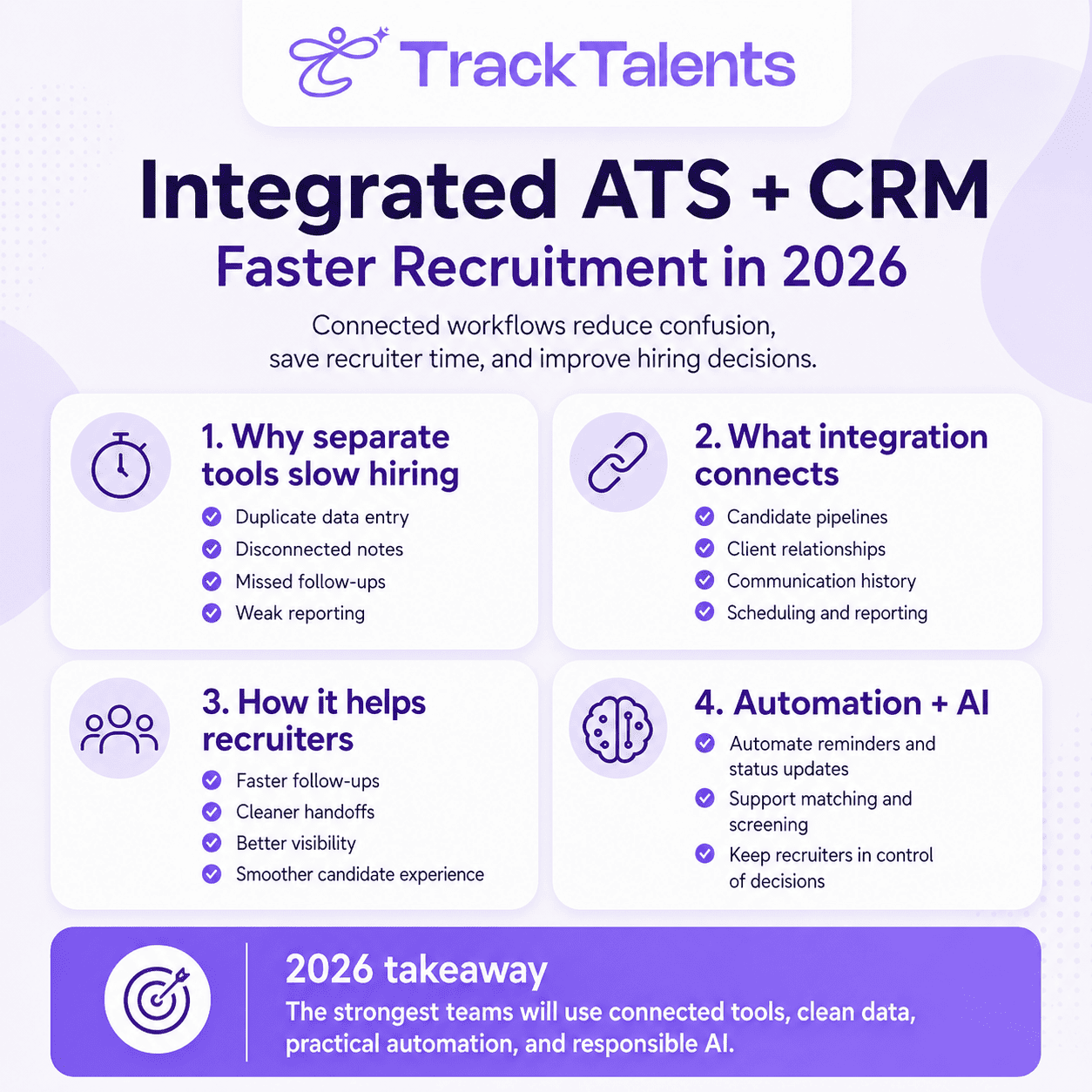
- Use an applicant tracking system as a reliable record of jobs, candidates, submissions and communication.
- Evaluate service through candidate relevance, interview conversions, successful starts, retention and client feedback—not placement numbers alone.
Together, these practices give staffing managers a practical view of what strong agency performance looks like and where their own operations may need improvement.
Start Every Assignment with a Detailed Client Discussion
A job description rarely explains everything a recruiter needs to know. It may list responsibilities and qualifications without clarifying which requirements are essential, which can be learned, and what the person will face in daily work.
Before sourcing candidates, the staffing agency should discuss:
- The business reason for the vacancy
- Main responsibilities and immediate priorities
- Essential and preferred skills
- Qualifications or licenses required by law
- Reporting structure
- Team size and working relationships
- Location, shift and travel requirements
- Salary or pay range
- Employment type and contract duration
- Physical or safety requirements
- Interview and approval stages
- Expected start date
- Indicators of success during the first few months
Where appropriate, the recruiter should speak directly with the hiring manager rather than depend entirely on information passed through procurement or HR. A workplace or site visit may also help the agency understand the environment, equipment, shift pattern and practical demands of the job.
The American Staffing Association advises employers to confirm that a staffing partner understands the role and follows appropriate recruiting, screening and testing practices. Agencies can show this in practice by documenting the client briefing, agreed qualifications, screening steps and any later clarifications.
Structured interview guides, evaluation scorecards and candidate assessment notes provide a clear record of how each shortlist was prepared. Where relevant, agencies may also share background-check policies, test certifications, or anonymized assessment samples, provided that candidate and client confidentiality is protected. This documentation reassures clients that candidates are being evaluated through a consistent and professional process.
A thorough intake discussion lowers the chance of submitting candidates who meet the written qualifications but misunderstand the actual position.
Separate Essential Requirements from Preferences
Clients sometimes describe every requirement as mandatory. This can create an unnecessarily narrow search and exclude capable candidates who could perform the work with little training.
The recruiter should ask the hiring manager to distinguish between:
- Qualifications required by law or regulation
- Skills needed from the first day
- Experience that would be useful but is not essential
- Tasks that can be taught
- Preferences based on the current team
- Requirements that no longer reflect the role
A detailed briefing often exposes gaps between the client’s expectations and the realities of the market. The employer may ask for extensive experience while offering compensation suited to an early-career candidate, or expect an immediate shortlist for a specialist role that requires a broader search.
The agency should address these gaps before committing to a timeline or shortlist. Accepting unrealistic conditions may keep the conversation comfortable at first, but it often leads to weak submissions, delayed hiring, and frustration on both sides.
A credible staffing firm does more than accept a job order. It helps the client shape a role that can attract suitable candidates at a realistic salary and within a practical timeframe.
Agree on Responsibilities Before the Search Begins
Client relationships become difficult when the agency and employer have different expectations about communication, candidate ownership, or hiring timelines.
A written agreement or service schedule should clarify:
- Services included in the assignment
- Roles handled by the agency and the client
- Submission and feedback process
- Candidate ownership and duplicate-submission rules
- Fees and payment terms
- Replacement or guarantee conditions, if offered
- Background or reference checks to be completed
- Confidentiality requirements
- Whether subcontractors or partner agencies may be involved
- Who can approve an offer?
- How urgent or after-hours issues will be handled?
The ASA Search and Placement Code of Ethics recommends clearly defining the services provided, including screening methods and the extent of reference or background checks. It also identifies candidate and client confidentiality as important considerations.
The agreement should prevent misunderstandings without making everyday communication rigid or overly formal. Both parties should have a designated contact and a straightforward process for resolving questions or delays quickly.
Recruiters Need Role Knowledge as Well as Sourcing Skills
A recruiter cannot evaluate candidates properly by matching job titles and keywords alone. Effective screening requires an understanding of the work, the industry, and the evidence that demonstrates competence.
Agencies can improve recruiter capability through:
- Industry or functional specialization
- Training on job analysis
- Structured screening guides
- Knowledge of relevant qualifications and licenses
- Interview and assessment training
- Employment-law and data-protection awareness
- Client-specific briefings
- Regular reviews of submitted and rejected profiles
Good recruiters recognize when a role requires expertise beyond their own. A generalist may be able to identify potential candidates for a technical vacancy, but evaluating specialist knowledge may require support from a subject-matter expert or the client’s hiring manager.
Agencies can prepare for such assignments by identifying internal specialists, building relationships with independent consultants, or arranging joint screening with client-side experts. Establishing these resources and review procedures in advance allows the agency to assess technical candidates credibly without overstating the recruiter’s expertise.
Interview confidence should not be confused with job capability. Eye contact, speaking style, and other non-verbal behavior can vary according to culture, personality, disability, and interview setting. These observations should not outweigh verified experience, work samples or answers to job-related questions.
The CIPD recommends standardized interviews that ask candidates comparable questions and score responses against predetermined criteria. This gives recruiters a more reliable basis for evaluating candidates than general impressions.
Build a Sourcing Plan for Each Vacancy
Using more job boards does not automatically produce a stronger shortlist. The appropriate sourcing channels depend on the role, location, seniority, and talent availability.
A staffing agency may draw candidates from:
- Its existing database
- General job boards
- Specialist or industry-specific job boards
- Employee and candidate referrals
- Professional associations
- LinkedIn and other professional networks
- Colleges and training institutions
- Industry events
- Local employment communities
- Personal outreach to relevant professionals
For specialist or senior positions, relying solely on active applicants may yield a narrow search. Recruiters may need to identify and contact professionals who are not currently applying but could be interested in a relevant opportunity.
Social media can extend the reach of a vacancy, but automated posting should not replace active sourcing. Agencies should also avoid posting the same generic vacancy repeatedly across every channel.
Measure sourcing quality by the candidates who progress, not simply by the number of applications received. Useful comparisons include:
- Qualified applications by source
- Candidates submitted to the client.
- Interviews secured
- Offers accepted
- Successful starts
- Early retention or assignment completion
A job board that produces fewer applications may still be more valuable if those applicants are consistently relevant.
Submit Candidates with Clear Evidence
A shortlist should help the client make a decision. Sending several resumes without explaining their relevance transfers the screening work back to the employer.
Each submission should provide concise, verified information such as:
- The candidate’s current role and relevant experience
- Skills connected to the vacancy
- Required qualifications or licenses
- Availability and notice period
- Location and work arrangement
- Salary or rate expectations
- Work authorization where relevant
- Interest in the particular position
- Any requirement that remains unconfirmed
Recruiters should not change a candidate’s resume without permission or add claims that the candidate cannot verify. They should also obtain the candidate’s agreement before presenting the profile to a client.
Tell the client where the candidate matches the role and where they fall short. If one preferred skill is missing, mention it. The client may still decide that the candidate is worth interviewing. Being upfront is far better than allowing the hiring manager to discover the gap later.
The ASA Code of Ethics also expects staffing firms to verify a candidate’s qualifications and present them accurately.
Keep Candidates Updated Throughout the Process
Candidate experience is part of the staffing agency’s service. A recruiter represents the agency and influences how the candidate views the client.
Candidates should receive clear information about:
- The employer or assignment, subject to confidentiality
- Responsibilities and work arrangement
- Salary or pay rate
- Contract length
- Interview stages
- Documents or checks required
- Expected decision timeline
- Any significant change to the vacancy
The agency should update candidates when an interview is delayed, the role is placed on hold, or the client changes the requirements. Avoiding an uncomfortable conversation does not make the problem disappear; it leaves the candidate unable to plan.
Recruiters should also avoid contacting a candidate only when they need to fill a vacancy. Thoughtful communication after interviews, offers and placements assists in maintaining a credible professional relationship and keeps the database more accurate.
Automation can handle acknowledgments and reminders, but interview feedback, offer discussions, and sensitive rejections often need direct communication.
Respond Quickly Without Creating a Permanent Emergency
Clients expect a quick response when an assignment is urgent or a temporary worker cancels before a shift. That does not mean every recruiter should remain available around the clock.
A staffing firm needs clear service arrangements covering:
- Normal working hours
- Expected response times
- Weekend and leave coverage
- A named after-hours contact
- The types of issues that qualify as emergencies
- The steps for escalating an urgent matter
A last-minute request to replace an absent worker or report a workplace safety incident may require immediate attention. Routine feedback, scheduling questions, and updates on submitted candidates can usually wait until normal business hours.
The ASA advises employers to confirm how they can reach their staffing partner during an emergency outside regular hours. The agency should therefore provide a simple escalation route: the recruiter handles the issue when available, a team leader steps in when necessary, and the after-hours contact is reserved for genuine emergencies.
This approach gives clients reliable support without placing the entire responsibility on one recruiter or turning every request into a crisis.
Understand the Client’s Workplace Without Copying Each Preference
A staffing agency should understand the client’s working environment, management style, pace, and communication practices. This information can help candidates make an informed decision and prepare for the assignment.
However, “culture fit” should not be a vague reason for selecting people who resemble the existing team. Personal similarity, shared interests, or a familiar communication manner do not prove that someone can perform the job.
Recruiters should translate culture-related requests into observable work requirements. For example:
- “Fast-paced” may mean managing multiple customer requests simultaneously.
- “Independent” may mean working without close daily supervision.
- “Collaborative” may mean sharing technical information among departments.
- “Adaptable” may mean responding to changing production schedules.
This approach gives candidates something specific to demonstrate and makes the client’s expectations easier to evaluate.
The agency can adapt to the client’s approval process, reporting format and workplace procedures. It should not abandon its own standards for confidentiality, fairness, safety or accurate candidate representation.
Clarify Legal, Safety and Employment Responsibilities
Staffing arrangements can involve responsibilities shared between the staffing company and the client. These responsibilities vary by country, worker classification, industry and type of assignment.
For temporary staffing, the agency may be the worker’s employer while the individual performs work under the client’s direction. The American Staffing Association explains that staffing firms and clients need to understand their respective responsibilities within this co-employment relationship.
Depending on the arrangement and jurisdiction, the parties may need to clarify responsibility for:
- Pay and employment records
- Workplace supervision
- Safety training and protective equipment
- Working hours and overtime
- Leave and benefits
- Worker classification
- Licenses and background checks
- Harassment reporting
- Injury reporting
- Data protection
- Ending or changing an assignment
A client should not change a temporary worker’s responsibilities without informing the staffing agency, particularly when the new work brings different safety, qualification, or pay considerations.
Legal requirements differ greatly, so firms should obtain advice relevant to the countries and industries in which they operate. Managers should stay up to date on compliance issues by consulting employment law advisors, joining industry associations such as the American Staffing Association or regional equivalents, and subscribing to legal newsletters or online resources that track regulatory changes. Regular review of reputable sources and participation in professional events can support risk management and help agencies respond proactively to new requirements.
Use an ATS as the Agency’s Operational Record
A staffing agency needs to track more than applications. It may need to connect candidates, clients, contacts, job orders, submissions, interviews, placements, vendors, and worker records.
An applicant tracking system can provide a central place to manage:
- Client job requirements
- Candidate resumes and contact details
- Recruiter ownership
- Submission history
- Duplicate profiles
- Interview schedules
- Client feedback
- Candidate communication
- Consent and retention information
- Placement status
- Recruiter activity
- Timesheets and invoicing where supported
The ATS should not automatically reject candidates through untested rules or treat a keyword match as proof of suitability. Recruiters remain responsible for reviewing profiles and documenting why a candidate was submitted or rejected.
Data quality also affects the system’s usefulness. Duplicate records, unclear status labels, and incomplete notes can make reports unreliable and cause recruiters to contact candidates about unsuitable or outdated opportunities.
Agencies should agree on record-keeping standards and review user access whenever an employee changes responsibilities or leaves the organization.
Measure Service Quality Beyond the Number of Placements
Placement volume is important, but it does not explain the quality of the agency’s work. A firm can make several placements and still experience early departures, dissatisfied clients or repeated candidate complaints.
A wider performance review may include:
- Time to first relevant submission
- Percentage of submissions invited to interview
- Hiring-manager feedback time
- Interview-to-offer ratio
- Offer acceptance
- Successful start rate
- Early assignment termination
- Temporary-worker redeployment
- Client retention
- Candidate withdrawal
- Complaints and communication failures
- Data or compliance incidents
Metrics should be compared across similar roles and interpreted in context. A specialist search may take longer than high-volume hiring, yet still produce stronger results.
Client and candidate feedback should also be reviewed during internal meetings. The purpose is to observe patterns, such as unclear job briefs, slow interview decisions or inaccurate pay information, and correct the process responsible for them.
Where TrackTalents Supports Staffing Operations
TrackTalents is a cloud-based applicant tracking system designed for recruiters, staffing agencies, and HR teams. According to its official features page, the platform includes:
- Job creation and posting
- Resume parsing and bulk upload.
- Candidate, contact, and vendor records
- Email templates and communication tracking
- Interview scheduling
- Custom recruitment workflows
- An integrated career portal
- Onboarding and e-signatures
- Timesheet management
- Invoicing and payroll-related functions
- QuickBooks integration
- Cloud storage and authenticated access
The connection between candidates, contacts, vendors and jobs may be useful for staffing firms that need to manage both recruitment and client relationships. Timesheet and invoicing functions may also support agencies responsible for placing or temporarily employing workers.
Before adopting the system, agencies should verify which job boards, integrations, user permissions and security controls are available in the relevant plan. They should also test candidate ownership, duplicate handling, submission records, client workflows, reports and data export. To get the most from a trial period, agencies can follow several best practices: set up sample jobs and candidate profiles based on real scenarios, involve key users from both recruiting and account management teams, and simulate a typical recruitment workflow from job intake to placement. Taking notes on ease of use, system limitations, and reporting features will help identify any concerns or training needs before a full rollout. Agencies should also gather feedback from participants at the end of the trial to support a more informed decision.
TrackTalents currently advertises a 14-day free trial. Agencies can use a controlled trial with dummy candidate and client records to confirm whether the platform accommodates their actual operating process.
Build the Agency Around Repeatable Quality
Clients continue working with a staffing agency when its recruiters understand their vacancies, present credible candidates, and communicate honestly. Candidates return when they get accurate information and respectful treatment.
The real strength of a staffing agency lies in doing the fundamentals well every time: understanding the role before beginning the search, properly training recruiters, sourcing through the right channels, assessing candidates against agreed-upon criteria, and communicating when circumstances change.
Being a dependable partner does not mean agreeing to every request or remaining available around the clock. It means being honest about the market and expected timelines, following through on commitments and running a process that clients and candidates can rely on.