Cold calling in recruitment still has a place in sourcing, especially when recruiters need to reach professionals who are not actively applying for jobs. The problem is not the call itself. It is the generic, poorly timed, and irrelevant way many calls are made.
Candidates quickly lose interest when recruiters cannot explain why they were selected, avoid basic questions about the role, or continue speaking after the candidate has said it is not a good time. A useful call should establish relevance within the first minute and give the candidate control over whether the discussion continues.
Recruitment cold-calling scripts can help recruiters organize the conversation, but they should never be read as fixed speeches. The recruiter still needs to listen, ask follow-up questions and adjust the discussion based on the candidate’s response.
Cold Calls Succeed When There Is a Genuine Reason to Reach Out
Job advertisements mainly reach people who are already searching or willing to browse vacancies. Direct sourcing allows recruiters to reach professionals who may not be applying but could consider a relevant opportunity.
LinkedIn defines passive candidates as people who are not actively looking for a new job but may be interested in the right role. Its recruiting guidance cites a 2023 Achievers estimate that passive candidates represent 39% of the talent pool. That figure comes from a single study and should not be treated as a universal metric, but it shows why employers continue to use personal outreach alongside job advertising.
Cold calling should not be the only sourcing method. LinkedIn recommends using existing ATS records, referrals, professional associations, alumni networks, social media, and conferences to find passive candidates. SHRM also identifies networking and employee referrals as useful, as people may be more willing to respond when the introduction comes from someone they trust.
A call becomes valuable when the recruiter has a specific reason to contact the person. “I saw your profile and have an opportunity” is not enough. The candidate needs to understand which part of their background attracted attention and why the role may be relevant.
Prepare Before You Dial
Many cold calls fail because the recruiter starts calling before properly qualifying the vacancy.
Before contacting a candidate, confirm:
- The actual responsibilities
- Essential and preferred skills
- Approved salary or rate range
- Location and work model
- Employment or contract type
- Shift or travel requirements
- Reporting structure
- Notice-period expectations
- Interview stages
- Client identity, when it can be disclosed
- Reasons the position is open
The recruiter should also review the candidate’s background.
Identify one or two points that justify the call, such as:
- A relevant technical skill
- Work in the same industry
- Experience with a similar client group
- A professional license or certification
- Knowledge of a particular market
- A recent project
- Leadership of a comparable team
- Experience in the required location
Avoid assumptions based only on a job title. A “Project Manager” may work in construction, software, banking, manufacturing, or healthcare. A recruiter who has not reviewed the underlying experience may present a completely unsuitable role.
Previous interactions also matter. Search the ATS or CRM before calling to see whether the candidate:
- Applied before
- Was previously interviewed
- Declined another vacancy
- Requested contact at a later date
- Specified a minimum salary
- Rejected relocation
- Preferred permanent or contract employment
- Asked not to be contacted
Calling without checking this information makes the agency appear disorganized.
Use Four Methods to Guide the Conversation.
A good recruitment cold call can be organized into four stages.
1. Ask for permission
Confirm whether the person can speak.
A simple opening such as “Is this a suitable time for a brief career-related call?” gives the candidate an easy way to continue, postpone or decline.
Do not say, “I’ll only take two minutes,” and then speak for ten. When the candidate is busy, ask for a more suitable time.
2. Explain the relevance
State why the candidate was selected.
Mention the skill, project, industry, or experience that connects the person to the vacancy. Avoid exaggerated statements such as “You are perfect for this role” before completing any screening.
A more credible approach is:
Your experience appears relevant, particularly your latest work with SAP S/4HANA. I intended to confirm a few details before deciding whether the role is worth discussing further.
3. Ask discovery questions
Find out what the candidate would realistically consider.
Useful areas include:
- Current career situation
- Preferred responsibilities
- Salary expectations
- Work model
- Location
- Notice period
- Contract preference
- Reasons to consider a move
- Factors that would rule out a role
The call should be a conversation, not a job description delivered over the phone.
4. Agree on the next action
Finish with one clear outcome:
- Send the job brief
- Arrange a detailed screening call
- Request an updated résumé
- Submit the candidate after approval
- Contact the person at a later date
- Record that the candidate is not interested
- Ask permission to retain preferences for future roles
Candidates should know what will happen and when.
Scripts for Common Recruitment Calls
The following recruitment cold-calling scripts are frameworks. Recruiters should adjust them to the role, market, and candidate.
Script 1: Calling a Passive Candidate
Use this when the person has not applied and may not be actively looking.
Hi [Candidate Name], this is [Your Name] from [Agency or Company]. We haven’t spoken before. Is this a suitable time for a brief career-related call?
[Pause]
Thank you. I came across your background while researching professionals with experience in [specific skill, industry, or project area]. I’m working on a [Job Title] role where that experience appears relevant.
I don’t want to assume you’re looking for a job. Are you willing to hear about an opportunity if the main details match what you would consider?
[Pause]
The role focuses on [one or two meaningful responsibilities]. It is based in [location], the work model is [remote, hybrid or on-site], and the expected compensation range is [range, when approved for disclosure].
Does that sound relevant enough to discuss for a few more minutes?
[Pause]
Before I give you the full description, what would be most important in your next move—role scope, compensation, flexibility, management responsibility or career progression?
Script 2: Calling Someone Found Through LinkedIn
Use this when a LinkedIn profile contains a specific point connected to the vacancy.
Hi [Candidate Name], this is [Your Name] from [Agency or Company]. Is this an opportune time for a short call?
[Pause]
I found your LinkedIn profile while searching for people with experience in [specific area]. I noticed your work on [specific project, tool or responsibility], which is why I contacted you.
I’m hiring for a [Job Title] position involving [relevant responsibility]. Are you open to hearing about suitable roles, even if you’re not actively applying?
[Pause]
The position is with [company or client description], and the main requirement is [essential capability].
Before I send the details, could I check your preferred location or work model, the type of responsibility you want next, and the compensation level you would expect?
LinkedIn advises recruiters to begin with a proper discussion with the hiring manager, define the essential requirements, and personalize outreach to passive candidates rather than relying on broad messages.
Script 3: Calling a Referred Candidate
Use this when an employee, candidate, client, or professional contact recommends someone.
Hi [Candidate Name], this is [Your Name] from [Agency or Company]. [Referrer Name] suggested that I contact you regarding a [Job Title] position.
Do you have a few minutes, or would another time be better?
[Pause]
[Referrer Name] mentioned your experience in [specific area]. The role requires someone who has handled [specific responsibility], so I wanted to speak with you directly.
Are you open to hearing about the opportunity?
[Pause]
The position involves [brief scope], and the employer particularly needs [important requirement].
Before I continue, what would make a new role worth considering at this stage of your career?
[Pause]
Based on what you’ve shared, I can send a concise description first. Would you prefer that, or should we arrange a longer discussion?
Do not use the referrer’s name unless that person has agreed to the introduction.
Script 4: Screening a Candidate Who Has Applied
Use this when the candidate has already expressed interest.
Hi [Candidate Name], this is [Your Name] from [Agency or Company]. I’m calling about your application for the [Job Title] position.
Is this a suitable time for a brief screening discussion?
[Pause]
I reviewed your résumé and wished to clarify a few details before deciding on the next step.
What interested you in this particular role?
[Pause]
The position involves [main responsibility], and the employer requires practical experience in [essential skill]. Could you tell me about your most relevant work in that area?
[Pause]
I also wish to confirm the practical details so neither of us wastes time. What is your notice period, expected compensation, preferred work model, and interview availability?
[Pause]
The next step will be [specific action]. I’ll send the role information and confirm the planned timeline in writing.
Script 5: Calling When Salary May Decide Interest
Use this when the compensation range is likely to be the first decision point.
Hi [Candidate Name], this is [Your Name] from [Agency or Company]. I’m contacting you about a [Job Title] role that corresponds with your experience in [specific area].
Do you have two minutes?
[Pause]
I wish to be transparent about compensation before taking you through the full position. The approved range is [range], depending on experience and the interview assessment.
Would that range make the opportunity worth discussing?
[Pause]
If yes: The role focuses on [scope], and the employer is looking for [specific capability]. What else would you need to know before deciding whether to proceed?
If not, I understand. I don’t want to push an opportunity that does not meet your expectations. What range and type of role should I keep in mind for future contact?
Thank you. I’ll update your preferences so you aren’t contacted for positions below that level.
Do not present an aspirational or unapproved salary as though it is confirmed.
Script 6: Calling for a Hard-to-Fill Skill
Use this for specialist technical, engineering, healthcare, scientific, financial or regulated positions.
Hi [Candidate Name], this is [Your Name] from [Agency or Company]. I’m contacting you because your background in [specific skill, certification or domain] appears relevant to a specialist vacancy I’m handling.
Is now a suitable time for a brief discussion?
[Pause]
The position requires practical experience with [specific requirement], rather than general exposure. That is why I wanted to speak directly rather than send a generic message.
How recently have you used [skill or technology], and in what type of environment?
[Pause]
The role also involves [secondary requirement]. Is that within your present experience and career direction?
[Pause]
Based on what you’ve explained, it may be worth a detailed discussion. I can send a short brief covering the responsibilities, essential requirements, work model, interview process, and compensation. Would you wish me to do that?
Script 7: Re-engaging a Previous Candidate
Use this when the person already exists in the ATS or was considered for another position.
Hi [Candidate Name], this is [Your Name] from [Agency or Company]. We spoke previously regarding [earlier role or hiring discussion].
Is this still a suitable number to reach you?
[Pause]
I’m calling because a new [Job Title] vacancy has opened, and it appears to be more closely aligned with your experience in [specific area] than the earlier opportunity.
Are you currently ready to discuss suitable roles?
[Pause]
During our prior conversation, you mentioned [salary, location, work model, or notice period preference]. Is that information still current?
[Pause]
Thank you. I’ll send the role only if the main points match your current preferences. If they don’t, I’ll update your record so future contact is more relevant.
The recruiter should never pretend to remember an earlier conversation that has not been reviewed. Use the information stored in the system and confirm that it is still accurate.
Script 8: Asking for a Referral After a Candidate Declines
Use this only after accepting the person’s lack of interest.
I understand that the role is not suitable for you. Thank you for being clear.
Before I close the conversation, do you know anyone who might be interested in a [Job Title] position that requires [particular skill or responsibility]?
The ideal person would have [essential experience], be open to [location or work model], and have approximately [experience range].
I will send you a short description to forward. Please ask the person to contact me directly, or confirm that they are comfortable with an introduction before sharing their details.
Thank you again. I’ll also update your preferences so you aren’t contacted for similar roles unless something changes.
A referral request should not pressure the candidate to disclose another person’s private contact information.
Share the Details That Decide Interest
Some recruiters withhold important information to “sell the opportunity” first. This usually delays rejection rather than preventing it.
Candidates commonly want to know:
- Salary or rate
- Location
- Remote or hybrid arrangement
- Shift
- Contract duration
- Employer or client
- Main responsibilities
- Seniority
- Travel
- Visa or work-authorization requirements
- Interview process
Share the available details early when they are likely to determine interest.
If the client name is confidential, explain the reason and provide ample context to make the discussion useful:
The client name is confidential at this stage, but it is a mid-sized pharmaceutical manufacturer based in Hyderabad. I can disclose the company before your profile is submitted.
If the salary is not approved or cannot be shared, say so directly rather than inventing a range. Ask whether the candidate would like to continue under that condition.
Never guarantee:
- Interview selection
- Offer approval
- Salary negotiation
- Remote work
- Sponsorship
- Joining dates
- Promotion
- Client decisions
Recruiters can explain what has been confirmed. They should not promise outcomes controlled by someone else.
Address Objections Without Pressuring Candidates
An objection is not an invitation to argue.
“I’m not looking.”
I understand. I’m not asking you to decide today. Would you prefer that I briefly explain why I called, or should I close the conversation?
“Send me the job description.”
Certainly. Before I send it, may I confirm your preferred location and compensation range so I don’t send something that’s obviously unsuitable?
“The salary is too low.”
Thank you for being direct. What range would make a future opportunity worth discussing?
“I’m only interested in remote roles.”
Understood. Is that a firm requirement, or would you consider hybrid work under particular conditions?
“How did you get my number?”
Answer honestly:
I found your professional details through [source], or your information was already in our candidate database from [previous interaction]. I can remove the number and stop future calls if you prefer.
“I’ve already spoken to someone from your company.”
Do not carry on the pitch.
Thank you for telling me. I’ll check the existing record before taking any further action so you don’t receive duplicate contact.
The recruiter should listen for hesitation. A candidate may say “possibly” while clearly losing interest after hearing the location, pay or responsibilities.
A direct question can clarify the problem:
Is there any part of the role that already makes it unlikely you would proceed?
That question can save both sides from an unnecessary screening process.
Record Preferences and Follow Up Quickly
A candidate who agrees to receive details should not wait several days for them.
Send a concise follow-up which includes:
- Job title
- Main responsibilities
- Essential requirements
- Location and work model
- Salary range when available
- Contract type
- Interview stages
- Agreed next action
- Recruiter contact details
Update the ATS or CRM with factual notes from the conversation:
- Present interest level
- Preferred roles
- Salary expectations
- Location
- Work model
- Notice period
- Contract preference
- Availability
- Restrictions
- Follow-up date
- Contact objections
Refrain from subjective notes such as “difficult candidate” when the person simply rejected the salary or asked direct questions.
Records should help the next recruiter have a more relevant conversation, not lead to an unsupported judgment about the person.
Use Recruitment Software to Keep Calls Relevant
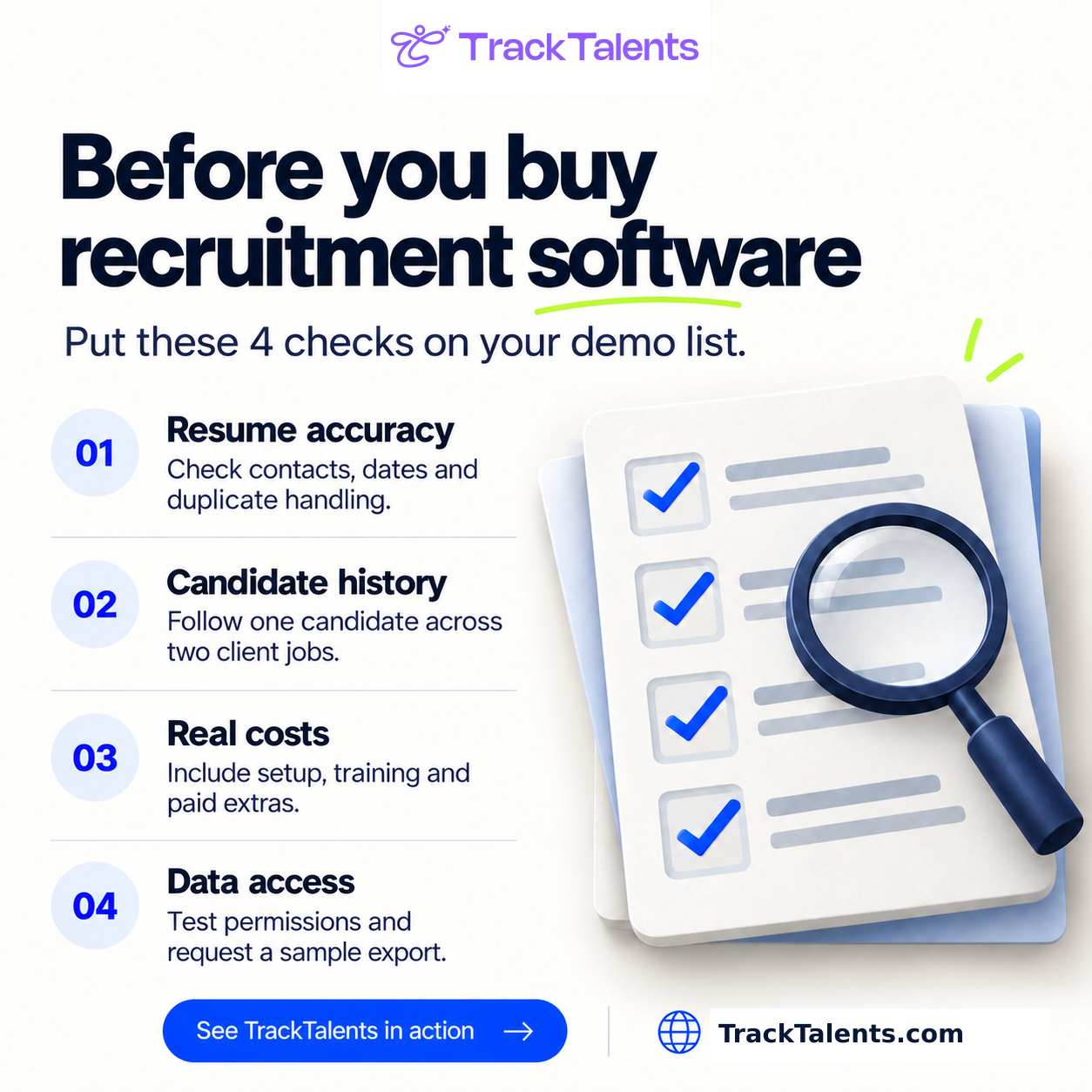
Recruitment software cannot make an unprepared recruiter persuasive. It can prevent repeated, poorly timed, and contradictory contact.
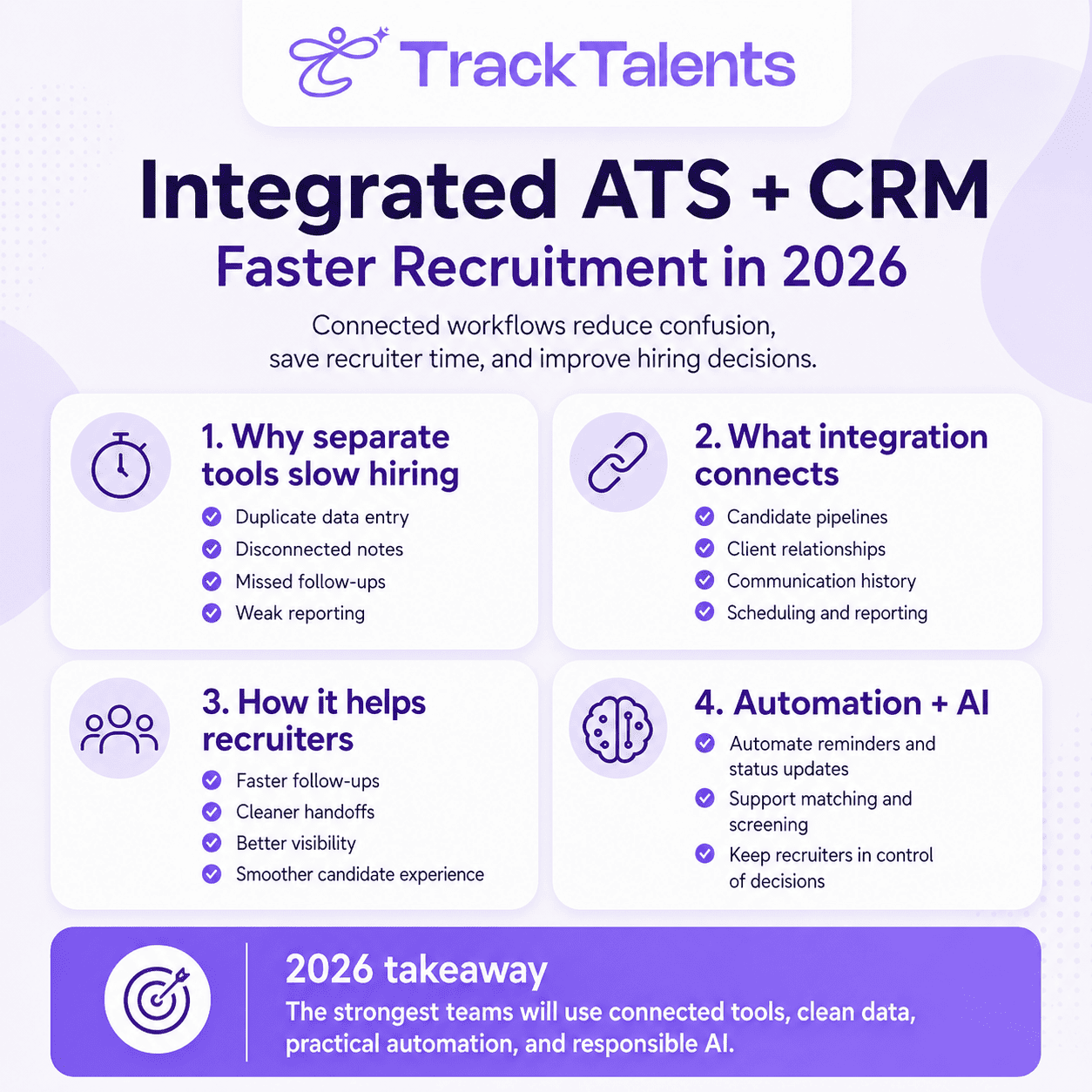
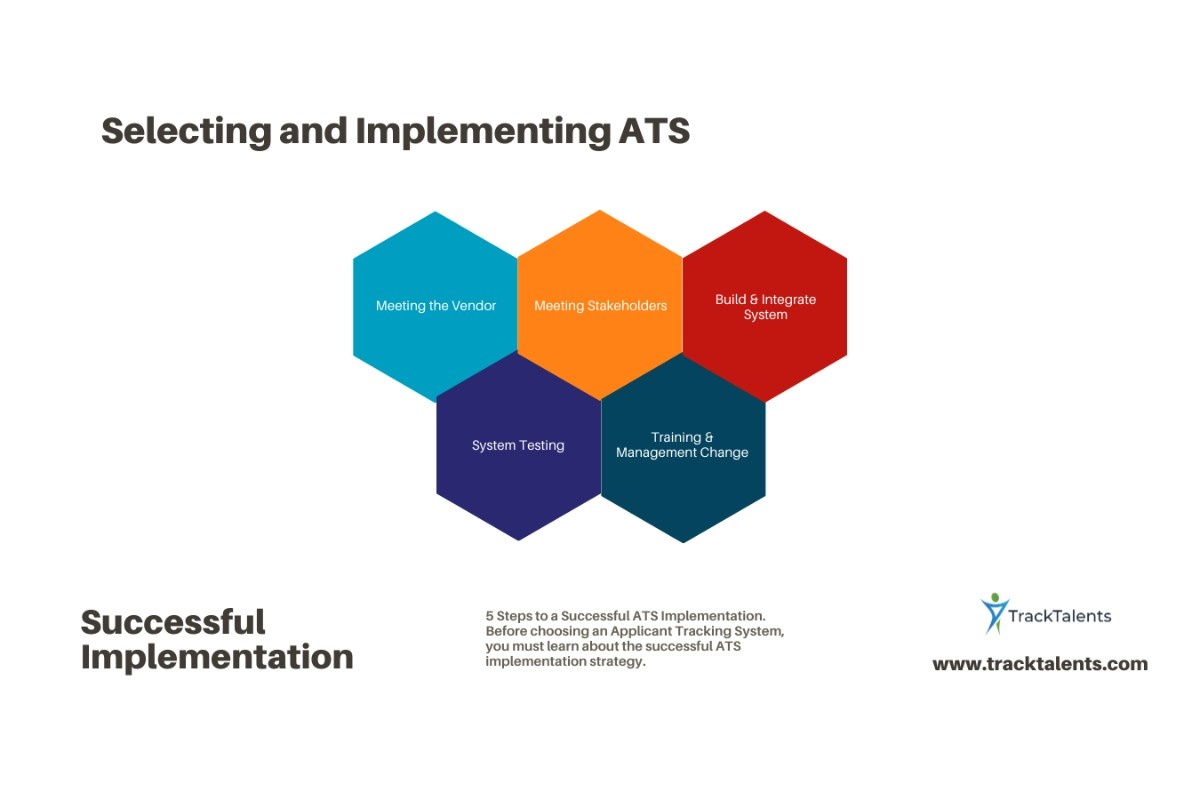
TrackTalents lists centralized job records that connect résumés, notes, and interview details. Its published features also include CRM links among candidates, contacts, vendors, and jobs, email activity tracking, interview scheduling, bulk mailing, and custom recruitment workflows. These functions can help staffing agencies preserve candidate preferences and see earlier interactions before making another call.
Recruit CRM is another ATS and CRM aimed primarily at recruitment agencies. Its official feature page lists automated email, LinkedIn and SMS sequences, candidate pipelines, call recording, workflow automation, and candidate sourcing tools.
The appropriate system depends on the agency’s operating model.
A high-volume staffing firm may prioritize:
- Candidate ownership
- Job pipelines
- Fast record updates
- Interview scheduling
- Bulk communication
- Vendor management
An executive search firm may place greater value on:
- Long-term relationship history
- Detailed research notes
- Client-contact management
- Search-project tracking
- Confidentiality controls
- Carefully scheduled follow-up
Whichever platform is used, recruiters need clear rules for:
- Recording calls
- Updating candidate preferences
- Organizing follow-up
- Handling duplicate profiles
- Marking people who have opted out
- Restricting sensitive notes
- Deleting or retaining inactive records
An ATS is useful only when recruiters keep it accurate.
Respect Privacy, Objections, and Calling Rules
Recruiters handle personal information, including names, phone numbers, professional profiles, employment history, and career preferences.
Publicly visible information is not free from data-protection obligations.
The UK Information Commissioner’s Office states that its recruitment and selection guidance applies to employers, recruitment agencies, head-hunters and consultancies that process candidate information. Recruiters must handle that information in line with the UK GDPR and Data Protection Act 2018.
The ICO also explains that using publicly available personal information still requires lawful, fair and transparent processing. Where outreach is treated as direct marketing under applicable rules, organizations must respect objections and cannot assume that information published online can be used without limits.
A practical recruitment calling policy should therefore include:
- A documented reason for processing candidate information
- Transparent privacy information
- Accurate records of the data source
- A method for candidates to correct details
- Immediate recording of “do not contact” requests
- Defined retention periods
- Restricted access to sensitive information
- Regular deletion or review of obsolete records
- Country-specific guidance for calls, texts and automated outreach
Rules vary by country and by communication method. A manual one-to-one recruitment call is not necessarily treated the same way as a sales call, an automated dialler, or a prerecorded message.
In the United States, the strongest federal restrictions highlighted by the FTC concern sales robocalls and prerecorded promotional calls, which generally require appropriate permission. State laws may add further requirements. Recruitment agencies using automated calling or mass-texting systems should seek legal advice rather than assuming that rules governing ordinary recruiter calls also apply to automated outreach.
Compliance should be built into the calling workflow, not added after complaints occur.
Measure Conversation Quality, Not Call Volume
A recruiter who makes 100 calls is not automatically more effective than someone who makes 30 well-researched calls.
Call volume may be useful for workload planning, but it should not be the only performance measure.
Better measures include:
- Contact-to-conversation rate
- Conversation-to-follow-up rate
- Candidate interest rate
- Screening conversion
- Submission conversion
- Interview conversion
- Opt-out rate
- Duplicate-call complaints
- Follow-up completion
- Accuracy of candidate preferences
- Re-engagement success
- Candidate feedback
High call volume combined with low relevance may damage the agency’s reputation and contaminate the database with rushed or inaccurate notes.
Managers should review recorded calls only where lawful, disclosed, and appropriate. The aim should be coaching, quality and compliance—not finding reasons to criticize every natural variation in conversation.
A Simple Follow-Up Note
Hi [Candidate Name],
Thank you for talking with me today.
As discussed, I’m sharing the details of the [Job Title] position. The role comprises [brief responsibility], with a focus on [particular skill or function].
The position is based in [location], the work model is [remote, hybrid or on-site], and the expected compensation range is [range, when confirmed].
I noted that you are particularly interested in [candidate preference]. Kindly examine the information and let me know whether you would like to continue.
The proposed next step is [screening call, résumé submission or interview], and I will contact you by [date or period].
Regards,
[Your Name]
[Agency or Company]
[Contact Details]
The message should reflect what was actually discussed. Avoid sending a long generic job description with no reference to the candidate’s questions or preferences.
A Good Call Ends with a Defined Next Step
Recruitment cold calling is not outdated. Careless cold calling is.
Candidates are more likely to continue when the recruiter:
- Has reviewed their background
- Clarifies the reason for calling
- Asks permission to continue
- Shares practical job information
- Listens before presenting the full role
- Accepts rejection without stress
- Records preferences accurately
- Follows up when promised
- Respects contact objections
- Avoids making unconfirmed promises
The call should normally finish with one of three outcomes:
- The candidate is interested, and the next step has been agreed.
- The candidate is not interested, and the conversation is closed respectfully.
- The candidate permits future contact under clear conditions.
Anything less often leaves both sides uncertain.
A recruitment cold-calling script provides structure. The quality of the conversation still depends on preparation, relevance, and the recruiter’s willingness to listen.
Frequently Asked Questions
What should a recruiter say at the start of a cold call?
Introduce yourself, identify the company or agency, and ask whether the candidate can take a brief career-related call. Next, explain the specific part of the candidate’s background that led to the contact.
How long should a recruitment cold call last?
The opening should establish relevance within the first minute. If the candidate is interested, the discussion may continue for several minutes or move to a scheduled screening call. Do not force a detailed conversation when the person is busy.
Should recruiters share salary during the first call?
Share the approved range early when compensation is likely to decide interest. Hiding the range might result in unnecessary screening and later withdrawal. When the salary is not confirmed or cannot be disclosed, explain that honestly.
Are recruiters allowed to call passive candidates?
Rules vary by country, data source, and calling method. Recruiters should have a lawful basis for processing personal information, provide required privacy information, and respect objections. Automated and prerecorded outreach may face stricter rules than manual calls.
How should recruiters respond when candidates say they are not interested?
Accept the response without stress. Ask whether the candidate wants future contact for a different type of role or prefers no further outreach. Record the answer accurately.
How can an ATS improve cold calling in recruitment?
An ATS can show previous contact, role submissions, candidate preferences, follow-up dates, and opt-out requests. This helps recruiters avoid duplicate, irrelevant, or poorly timed calls.
Should recruiters ask for referrals during a cold call?
They may ask after the candidate has declined the role, but the request should remain optional. Ask the candidate to forward the opportunity or obtain the other person’s permission before sharing contact details.