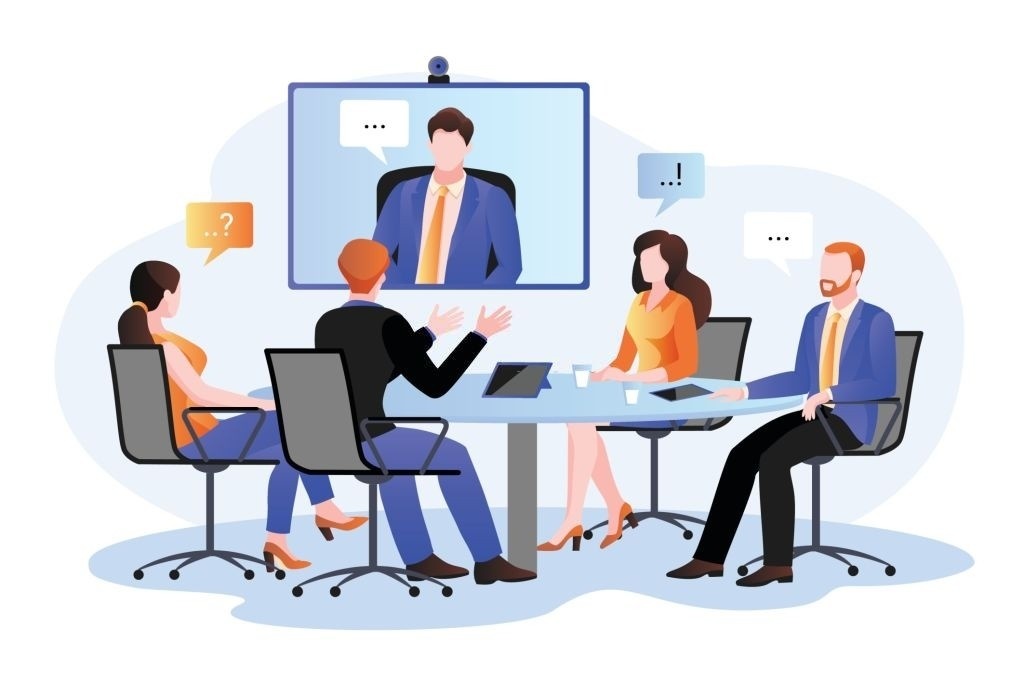
Video interviews are now a normal part of the hiring process. They help companies meet candidates faster, reach global talent, and keep hiring moving when teams work across locations.
But video hiring has moved far beyond a simple video link. It now shapes how teams structure, compare, and improve interviews.
Strong virtual hiring should do more than move faster. It should improve structure, fairness, speed, and candidate experience so teams make better decisions, not just faster ones. The best teams use video interviews, recorded and live conversations, skills-based tasks, interview scorecards, ATS integration, and clear communication to support that goal.
To help HR teams use these tactics, here is a simple step-by-step plan. For example, after defining the job needs for a new customer support role, an HR manager might set up a recorded video interview with five specific questions. Candidates send their answers, which several team members review using a shared scorecard. In another case, after interviewers learn to use structured questions and scoring, a panel can conduct live video interviews to assess problem-solving and team fit, ensuring feedback is quickly added to the ATS for easy tracking. These short examples show how the steps work in real life and help you picture each part more clearly.
When expanding virtual hiring, it is important to know common problems. These include interviewers’ resistance to new technology, technical problems during live interviews, uneven use of scorecards, and concerns about data privacy. To fix these, HR teams should provide clear training and quick guides for interviewers, set up a help line for technical issues, solicit feedback to streamline processes, and have backup technology ready. Planning for these issues helps reduce problems and makes it easier for everyone to adjust to new hiring ways.
- Define the job requirements and necessary skills for each role.
- Set up a structured interview process using recorded and live video interviews at different stages.
- Prepare concise instructions and communications for candidates, including what steps are involved and what to expect.
- Train interviewers on the platform, structured questions, scorecards, and the use of any AI tools.
- Incorporate a practical, skills-based assessment where appropriate.
- Ensure all candidate data and interview recordings are handled in accordance with compliance requirements.
- Integrate the interview process with your ATS for streamlined tracking and review.
- Collect feedback from both candidates and interviewers to improve the process.
Following this sequence can make the virtual hiring experience more consistent and effective for both candidates and hiring teams.
This matters because hiring is becoming more skills-focused. LinkedIn’s Future of Recruiting 2025 report says companies using more skills-based searches are 12% more likely to make a quality hire. It also notes that AI can help recruiters uncover skills, automate assessments, and improve hiring decisions when used with care. The goal is simple: use virtual hiring to understand candidates better while keeping the process clear, respectful, easy to follow, and focused on better decisions.
Build the Right Mix of Recorded and Live Video Interviews
A strong virtual hiring process does not treat every interview the same way. Different hiring stages needs different formats.
Use Recorded Interviews for Early Screening
Recorded interviews, also called asynchronous video interviews, work well in the early stage of hiring. Candidates answer a fixed set of questions in their own time. Recruiters can review answers without scheduling several calls.
This is useful for:
High-volume hiring
Global hiring
Campus hiring
Early screening
Customer-facing roles
Positions where communication matters
Hiring across time zones
Recorded interviews also bring more consistency. Each candidate receives the same questions, the same time limit, and the same instructions. This gives recruiters a cleaner way to compare responses.
But recorded interviews should feel fair and simple. Candidates should know:
Sample Candidate Instructions for Recorded Video Interviews
“Thank you for moving forward to the recorded interview stage. Here is what you can expect:
– You will answer 5 questions related to the role.
– You will have 2 minutes to think and 3 minutes to respond for each question.
– You can re-record your answer once for each question.
– Your video responses will be reviewed by our hiring team, not shared outside our company.
– The recordings will be stored securely for up to 6 months, after which they will be deleted.
– After you submit your responses, we will evaluate them and let you know about the next steps within 5 business days.
– If you need support or an accommodation to complete your interview, please contact us at hiring@example.com.
You can adapt this template for your process or create your own, but communicating these points helps candidates feel prepared and supports a fair process.
- How many questions will they answer?
- How much time will they have
- Whether they can re-record
- Who will review the video
- How long will the video be stored
- What happens after submission
Explicit instructions help applicants focus on their answers instead of guessing how the platform works.
Use Live Video Interviews for Deeper Evaluation
Live video interviews are better for later stages. They allow real conversation, follow-up questions, and two-way discussion.
Use live interviews to assess:
- Problem-solving
- Role depth
- Team fit
- Leadership style
- Client handling
- Critical thinking
- Collaboration
- Career motivation
Live interviews also give candidates a chance to ask questions. This is important. Candidates are not only being evaluated. They are also deciding whether the company is right for them.
The best virtual hiring process uses recorded interviews to reduce scheduling pressure and live interviews to build a stronger interpersonal connection, while still supporting better decisions.
Design Structured Video Interviews
Unstructured interviews often rely too heavily on personal impressions. A candidate may speak confidently but lack depth. Another may be quieter but highly capable. Without structure, interviewers can focus on the wrong signals.
Standardized interviews give every candidate a fairer chance and support better hiring decisions.
Harvard Business School advises employers to standardize interview questions and work tests so that each candidate can be reviewed more fairly and with input from multiple people. Research also shows that standardized interviews can reduce bias and support more consistent selection decisions.
What a Structured Video Interview Should Include
A structured digital interview should have:
- Role-specific questions
- Clear scoring criteria
- Interview scorecards
- Standard follow-up areas
- Defined competency areas
- Shared feedback forms
- Hiring manager notes
- Obvious next steps
For example, instead of asking a vague question such as “Tell me about yourself,” the interviewer can ask:
“Tell us about a time you solved a customer issue under pressure. What happened? What did you do? And what was the result?”
This gives the candidate a clear path to answer. It also gives interviewers a better way to compare responses.
Train Interviewers Before They Join the Panel
Many hiring managers are asked to interview candidates without formal training. This affects quality.
Before using video interviews, train interviewers on:
- How to use the platform
- How to ask role-based questions
- How to avoid leading questions
- How to complete scorecards
- How to take useful notes
- How to assess skills, not personality alone
- How to give timely feedback
A good platform helps, but trained interviewers make the process better. To improve interviewers’ skills quickly and consistently, offer a variety of practical training resources. These can include hands-on workshops on structured interviewing, checklists or quick guides with best practices, short video lessons on using the interview platform and scorecards, and practice sessions with real interview examples. Using different formats supports diverse learning styles and ensures all interviewers are ready before joining the panel. Sample training topics might be how to do structured interviews, reduce bias in video interviews, use scorecards fairly, take good notes and give feedback, understand legal issues in digital assessments, and create a positive candidate experience. Providing a clear set of training modules helps HR teams quickly start and standardize interviewer training. To make the rollout smooth, try the training with a small group first, get feedback on what works and what needs fixing, then improve the materials before sharing with the whole team. This helps answer questions early and get support for the new process.
Add Skills-Based Assessments to Virtual Hiring
Resumes show past experience. Interviews show how candidates explain that experience. Skills-based assessments show how candidates work.
In 2026, this difference matters.
A good virtual hiring strategy should include practical tasks when needed, as they help evaluate candidates more clearly and support better decisions. These tasks ought to match the role and be reasonable in length.
Examples of Video-Based Skills Assessments
For technical roles:
- Programming tasks
- System design discussions
- Debugging exercises
- Data analysis walkthroughs
- Architecture case reviews
For sales roles:
- Discovery call role plays
- Objection handling
- Account planning tasks
- Product pitch simulations
For customer support roles:
- Complaint handling scenarios
- Email response reviews
- Escalation simulations
For leadership roles:
- Team conflict case studies
- Decision-making exercises
- Change management discussions
- Stakeholder dialogue tasks
For marketing roles:
- Campaign review
- Content brief analysis
- Audience targeting discussion
- Performance reporting exercise
The task should show real work. It should not feel like free consulting or unpaid projects. To be fair, keep assessments focused on key job skills, limit them to a reasonable time (like 30-60 minutes), and avoid asking candidates to do multi-step projects or work that the company could use. For example, do not ask candidates to create a full marketing plan, solve a complex technical case, or give a detailed mock sales pitch. These tasks are too broad or may be unfair by asking for work that benefits the company before hiring. Instead, assessments should focus on specific job skills that match real situations and do not require extensive preparation or create work the company can use. Clearly tell candidates how much time is needed and make sure tasks can be done without special tools. This protects candidates’ time and keeps the process fair and respectful.
Sample Fair, Role-Specific Assessment Prompts:
– Customer Support Role: “Please watch this brief customer scenario video and record a 3-minute response explaining how you would address the customer’s issue, what steps you would take to resolve the problem, and how you would communicate updates during the process.”
– Marketing Role: “Review the attached product description and outline three social media post ideas suitable for LinkedIn. Explain your reasoning for each idea in a short video response (maximum 5 minutes).
– Technical Role: “Given the sample code provided, identify and explain one bug or performance issue you find. Record a 5-minute walkthrough of your thought process and suggest how you would address the issue.”
Providing clear, practical prompts like these helps ensure that assessments are both fair and relevant and gives HR teams a template to adapt for their specific roles.
Make AI Useful, Clear, and Human-Reviewed
AI is becoming part of virtual hiring. Some tools can transcribe interviews, summarize candidate responses, suggest follow-up questions, or help recruiters compare responses against job criteria.
These features can save time. But they need clear rules.
These features can save time. But they need clear rules.
To stay compliant when using AI and automated technologies in virtual hiring, HR teams should:
– Regularly review AI tool outputs for bias or unfair patterns
– Ensure all automated decisions are reviewed by a human before finalizing
– Document what AI tools are being used and how outputs inform decisions
– Maintain transparent consent practices with candidates regarding AI use
– Provide clear channels for candidates to request support or accommodations
– Review and update data storage and security practices to align with current privacy laws
These action steps help reduce risk and support a fair, transparent hiring process.
Use AI as Support, Not as the Final Decision
AI can help with:
- Interview transcription
- Candidate summaries
- Skills extraction
- Question suggestions
- Scheduling support
- Interview reminders
- Feedback organization
- Report generation
Human reviewers should still make hiring decisions.
Recruiters and hiring managers should be able to explain:
- What the AI tool reviewed
- What it did not review
- How the output was used
- Who made the final decision
- How candidates can request support or accommodation
This protects both the candidate and the employer.
Align Virtual Hiring with Global Compliance Rules
Global hiring is now common. A company may interview candidates in India, the United States, the United Kingdom, Europe, the Middle East, and Southeast Asia for the same role or team.
This makes compliance more important.
Video interviews may involve personal data, recordings, transcripts, assessment results, and automated screening. Each of these needs proper handling.
The European Commission states that the EU AI Act is the first complete legal framework on AI. It also takes a risk-based approach to AI systems, including systems used in employment-related areas. Guidance on the Act also identifies AI systems used for recruitment and employment decisions as high risk, including those used for candidate evaluation and selection.
What Employers Should Check Before using a video interview platform:
- Where are recordings stored?
- How long are recordings kept?
- Can candidates give unambiguous consent?
- Can candidates request deletion where laws allow?
- Who can access interview videos?
- Are ratings and notes stored in the ATS?
- Are AI-generated summaries marked clearly?
- Is there human review for automated outputs?
- Can candidates request accommodation?
- Are audit records available?
Compliance should be part of vendor selection because it supports a clearer, fairer, and stronger virtual hiring process.
When evaluating video interview platforms or virtual hiring vendors, HR teams should consider the following questions:
- Does the platform comply with privacy protection regulations in all relevant regions?
- Are interview data, recordings, and AI outputs securely stored and encrypted?
- Can the platform support transparent consent and candidate privacy controls?
- Are accessibility features (such as captions, screen reader compatibility, and adjustable time limits) built in?
- Is there clear documentation on how AI is used and how decisions remain human-controlled?
- Does the vendor provide audit records and easy reporting for compliance reviews?
- Can the platform integrate cleanly with the ATS and other HR systems?
- Is candidate support responsive, especially for technical issues and accommodation requests?
Considering these criteria helps HR professionals choose vendors that not only offer robust features but also comply with legal and ethical requirements for virtual hiring. In addition, consulting up-to-date peer reviews, user ratings, and independent industry reports can provide valuable insights when comparing vendors. These resources help teams understand real-world experiences and make more informed decisions based on current market trends.
Improve Candidate Experience in Virtual Interviews
Virtual hiring is still a human process, and a smooth platform cannot fix poor communication, unclear steps, or slow feedback. Strong candidate experience remains central to better decisions. To improve communication throughout the process, HR teams should adopt several best practices: set clear expectations with candidates about response times at each stage, proactively update candidates even if a decision is delayed, use simple, direct language in all messages, and provide a clear point of contact for questions or support. Regular check-ins help reassure candidates and reduce uncertainty. Sharing a summary of next steps after each interview, along with timely feedback, also strengthens engagement and trust.
NACE describes a high-quality candidate experience as one characterized by respectfulness, transparency, engagement, and genuineness, and notes that these apply to both face-to-face and virtual recruiting.
That is a useful standard for video interviews.
Give Candidates a Clear Interview Roadmap
Candidates should know:
- Who will they meet
- What the interview will cover
- How long will it take
- Whether the interview is recorded
- Whether AI tools are used
- What they need to prepare
- When can they expect feedback
- Who to contact for technical help
This reduces stress and improves the quality of responses.
Respect Time Zones
For global hiring, offer flexible options. Do not make one region bear the full burden of inconvenience.
Good practice includes:
- Offering more than one time slot
- Using recorded interviews for early screening
- Avoiding late-night or very early calls when possible
- Showing time zones clearly
- Sending calendar invitations with the correct local time
- Confirming interview links in advance
A candidate who feels respected during the interview process is more likely to stay engaged.
Make Virtual Interviews Accessible
Accessibility is not a side issue. It is part of fair hiring.
The W3C Web Content Accessibility Guidelines 2.2 provide recommendations for making digital content more accessible. The EEOC also explains that applicants with disabilities may be entitled to reasonable accommodation during the job application process.
Accessibility Features to Review
Video interview platforms should support:
- Captions
- Screen reader access
- Keyboard navigation
- Clear buttons and instructions
- Adjustable time limits where needed
- Alternative formats
- Low-bandwidth options
- Mobile access
- Easy technical support
- Accommodation request process
Accessibility helps more candidates complete the process with assurance. It also shows that the employer takes inclusion seriously.
Connect Video Interviews With the ATS
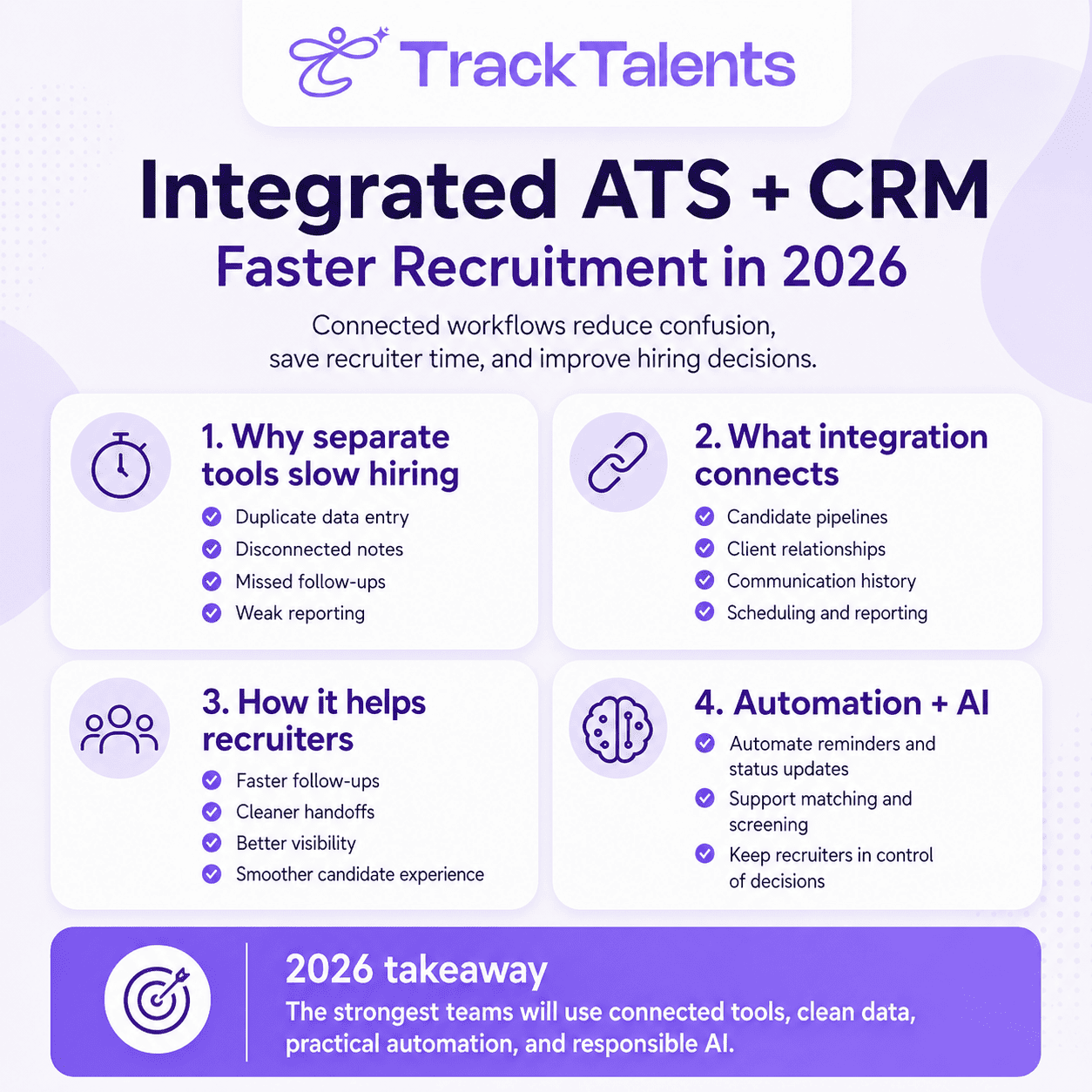
Video interviews become much more useful when they connect with the applicant tracking system.
Without ATS integration, recruiters may have recordings in one tool, feedback in emails, notes within spreadsheets, and candidate status in another system. This slows hiring and creates confusion.
Strong integration keeps everything in a single candidate profile.
What Must Flow Into the ATS
- Interview stage
- Interview date
- Interviewer names
- Video recording link
- Candidate consent record
- Interview scorecards
- Structured feedback
- Assessment results
- AI-generated summaries, if used
- Hiring manager comments
- Final decision notes
This gives recruiters and hiring managers one clear view.
It also supports better reporting. Teams can see which interview stages take too long, which roles need better questions, and where applicants drop off.
Use Interview Analytics to Improve Hiring Quality
Virtual hiring creates useful data, but the goal is not to collect more numbers. The goal is to improve decisions.
Interview metrics comprise:
- Time from application to interview
- Interview completion rate
- Candidate drop-off rate
- Interviewer feedback speed
- Scorecard completion rate
- Candidate satisfaction
- Offer acceptance rate
- Source-to-interview quality
- Interview-to-offer ratio
- New hire performance after selection
LinkedIn’s Future of Recruiting report notes that quality of hire is becoming a higher priority for talent teams. It also points to the growing use of AI and skills data to improve hiring outcomes.
Analytics should help answer practical questions:
- Are our questions measuring the right skills?
- Are interviewers scoring consistently?
- Are candidates dropping out after a specific stage?
- Are live interviews being used where they add value?
- Are our assessments too long?
- Are strong candidates moving quickly enough?
These conclusions help teams improve the hiring process over time.
Build a Virtual Hiring Workflow That Appears Professional
A strong virtual hiring process should feel simple for the candidate and clear for the hiring team.
Here is a practical workflow:
- Application Review
Recruiters review the resume, skills, experience, and role fit.
- Recorded Video Screening
Candidates answer a few role-based questions within a clear timeframe.
- Structured Recruiter Review
Recruiters score responses using a standard scorecard.
- Skills-Based Task
Candidates complete a practical assessment linked to the job.
- Live Video Interview
Hiring managers discuss role depth, work style, problem-solving, and expectations.
- Panel Review
Interviewers compare candidates using structured feedback.
- Final Conversation
The company discusses offer details, culture, manager expectations, and the following steps.
- ATS Documentation
Scores, feedback, notes, and decisions are recorded in the ATS.
This process keeps hiring organized without removing the human side.
Virtual Hiring Checklist
Before using or improving a video interview process, review these points:
- Are recorded interviews used only where they add value?
- Are live interviews reserved for deeper evaluation?
- Are interview questions linked to job skills?
- Are scorecards used consistently?
- Are candidates told how the process works?
- Are AI tools clearly governed?
- Is human review part of every decision?
- Is candidate consent captured?
- Are accessibility options available?
- Are recordings stored securely?
- Does the platform integrate with the ATS?
- Are hiring managers trained?
Are candidate experience metrics reviewed?
For example, do you track candidate satisfaction scores (via automated post-interview surveys), average response and feedback times (using ATS timestamps), the percentage of candidates getting timely updates (by reviewing communication logs), and candidate drop-off rates at each stage (with ATS reports or hiring dashboards)? Using automated surveys and system tracking makes it easier to collect relevant data and review practical metrics, helping detect bottlenecks and improve the overall candidate experience. In addition, HR teams can compare these internal metrics to industry benchmarks from sources such as LinkedIn or NACE reports. Reviewing industry averages helps teams set clear goals and measure their progress over time.
- Are time zones handled fairly?
- Are assessments realistic and respectful of candidates’ time?
A virtual hiring process should make hiring easier, clearer, and more reliable.
Final Thoughts
Advanced virtual hiring is not about adding more technology. It is about using technology with better judgment.
Recorded interviews can reduce scheduling pressure. Live interviews can build a connection. Structured questions can improve consistency. Skills-based tasks can show real ability. AI can save time when it is reviewed by humans. ATS integration can keep decisions organized. Accessibility and transparency can improve candidate trust. The strongest hiring teams will not treat video interviews as a swift call or a recorded formality. They will treat them as a structured part of the hiring strategy. When video interviews are designed well, companies move faster, candidates feel better prepared, and hiring decisions become more credible.