Back To Blogs

Unveiling the Essentials of an Applicant Tracking System

- March 25, 2024
in ATS
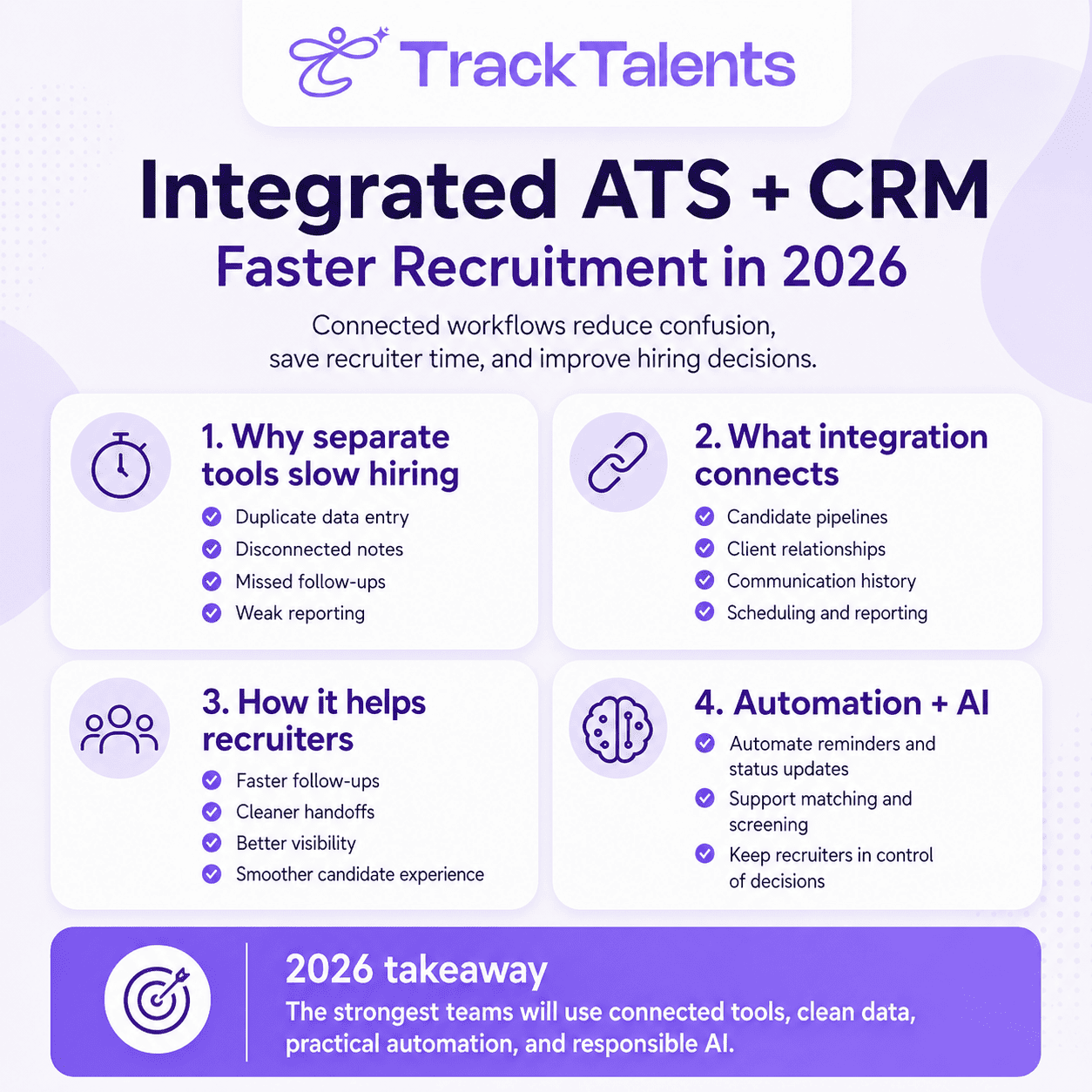
Recruitment becomes difficult to control when job applications arrive via multiple channels, interview feedback is scattered across separate email threads, and hiring managers cannot see which candidates are still under consideration. An applicant tracking system brings these processes into one structured workflow.
An ATS can do much more than scan resumes or filter applications. Its functions vary by platform, but many systems bring job postings, applications, screening, interview schedules, feedback, offers and reports into one workspace. Take interview scheduling as an example. When a candidate needs to meet several interviewers, the system may check their connected calendars, identify a suitable time and send the invitations. It can also keep everyone’s feedback with the candidate’s record. HR teams spend less time chasing replies across email threads and can quickly see what has been completed and what still requires attention.
The precise capabilities vary considerably. Some systems provide little more than a searchable candidate database, while others form part of an expanded talent acquisition platform. Understanding that difference is important for employers choosing software and candidates trying to make sense of the application process.

An Applicant Tracking System Creates One Record of the Hiring Process

An applicant tracking system is recruitment software used to track candidates from application through selection and hiring. Oracle describes an ATS as software that can range from a basic database to a full suite for filtering, managing, and analyzing candidates.
Without a central system, recruiters may need to move between job boards, inboxes, spreadsheets, calendars and shared documents. This makes it harder to determine:
  • Where each candidate is in the recruitment process
  • Who has reviewed an application?
  • Whether an interview has been scheduled
  • What feedback the hiring panel provided
  • When the candidate was last contacted
  • Why an applicant was rejected or moved forward
  • Which recruitment channels produced suitable candidates
An ATS creates a central candidate record and links it to a job vacancy, the recruitment stage, and the hiring activity history. Recruiters and authorized hiring managers can then work from the same information rather than keeping separate versions of the process.
The software provides structure, but it does not define a sound hiring strategy. Poorly written job requirements, inconsistent evaluations, and unnecessary approval stages remain poor practices even when they are administered through an ATS. To prevent these pitfalls, employers should clearly define essential and preferred qualifications for each role, use uniform criteria to evaluate candidates, and frequently review their hiring process for unnecessary steps. Aligning job requirements with actual job needs and ensuring interviewers follow consistent evaluation guidelines help make the most of an ATS and lead to better hiring decisions.

What Happens After a Candidate Selects Apply

Although products differ, most applicant tracking systems organize several recurring stages of recruitment.

1. The recruiter creates a job requisition

A recruiter or hiring manager enters the position title, description, department, location, employment type and other details. Internal approvals may be required before the vacancy is published.
The system may then distribute the opening to a company careers page, selected job boards, or other recruitment channels. The available distribution options depend on the ATS and its integrations.

2. The system collects the application

When a candidate applies, the ATS stores the information submitted through the application form. This may include:
  • Contact details
  • Resume or CV
  • Cover letter
  • Employment history
  • Education and qualifications
  • Answers to screening questions
  • Work-authorization information
  • Portfolio or professional profile links
The application becomes part of the candidate’s record and is connected to the relevant vacancy.

3. Resume parsing converts the document into searchable information

Many systems use resume parsing to extract information such as the candidate’s name, job titles, employment dates, skills and education. The ATS places this information into structured fields that recruiters can search or filter.
Parsing does not necessarily mean that the system has judged the candidate. It may simply be converting an uploaded document into searchable data. Workable’s explanation of resume parsing distinguishes this extraction process from the subsequent decisions recruiters make based on the information.

4. Candidates enter a recruitment pipeline

Recruiters can move applicants through defined stages such as:
  1. New application
  2. Initial review
  3. Recruiter screening
  4. Hiring manager review
  5. Assessment
  6. Interview
  7. Reference or background checks
  8. Offer
  9. Hired or rejected
The pipeline gives the hiring team a shared view of progress. It can also reveal delays, such as applications waiting too long for review or candidates remaining in an interview stage without a decision.

5. Communication and interviews are recorded

Depending on the system, recruiters may send emails, arrange interviews, record notes, and collect interviewer feedback within the candidate profile.
Automated messages can confirm receipt of an application, provide interview details, or communicate a rejection. These messages reduce repetitive administrative work, but they still call for careful timing and wording. A poorly configured rejection sent before the hiring team has completed its review creates a worse candidate experience, not a better one.

6. Hiring activity becomes reportable

An ATS may provide information on application volume, recruitment sources, stage conversion, time spent at each stage, and other operational measures. Reporting capabilities vary, so employers should not assume that every platform calculates recruitment metrics in the same way.
A dashboard can only work with the information recruiters give it. If candidate stages are not updated or rejection reasons are entered inconsistently, the report will not reflect what actually happened during the hiring process, no matter how advanced the software is.

Resume Parsing Is Not the Same as Candidate Ranking

Discussions about ATS software often combine three different functions: parsing, filtering, and ranking. They are related, but they are not interchangeable.
Parsing extracts information from a resume and places it into structured fields.
Filtering allows recruiters to narrow an applicant pool using selected criteria, such as location, qualification, skill, or application status.
Ranking or matching attempts to indicate how closely an application corresponds with stated job requirements. Only some systems provide this functionality, and the method varies by product.
A hiring team may also search its database for a particular job title, certification, or technical skill. Search results depend partly on the language contained in candidate records, but appearing in those results does not prove that a candidate is qualified—or unsuitable—for the position.
Employers should therefore understand exactly what a system is doing before relying on its output. A match score may be useful for ranking a large application pool, but it should not be treated as an objective measure of a person’s ability or future performance.

Does an ATS Automatically Reject Resumes?

An ATS can reject or disqualify applications automatically when an employer deliberately configures it to do so. That does not mean every ATS rejects resumes simply because they lack a particular keyword.
For example, an employer may add a yes-or-no application question about a mandatory license, work location, or legal requirement. Some platforms allow the employer to disqualify candidates automatically when their answer does not meet the stated condition. Workable’s product documentation confirms that its users can configure automatic disqualification through selected application questions.
Other applicants may be filtered, searched, scored, or reviewed manually. The decision depends on the employer’s workflow and the capabilities enabled in the system.
This distinction matters because the phrase “rejected by the ATS” can hide the actual cause. A candidate might be screened out by an employer-defined question, overlooked in a recruiter’s search, ranked lower by a matching feature, or rejected after human review. These are different events and should not be presented as one universal process.

The ATS Features That Matter in Daily Recruitment

A long feature list may look impressive during a product demonstration, but it says little about how the system will perform once recruitment begins. The real test is whether recruiters can review applications, follow candidate progress, share feedback and complete routine tasks without unnecessary steps. Reports should be clear and adaptable, while workflows need enough flexibility to reflect the organization’s hiring process. Reliable integrations with other HR tools are equally important, as are practical documentation and responsive support when users encounter problems. An effective ATS should make everyday recruitment easier to manage for the hiring team and straightforward for candidates to navigate.
Centralized candidate records Keeps applications, notes, communication and status history together Access controls, duplicate handling and data-search options
Job posting management Publishes vacancies to selected channels Supported job boards, posting accuracy and update process
Resume parsing Converts resumes into structured candidate information Parsing accuracy across common document formats
Screening questions Collects role-specific information at application stage Whether questions are necessary, lawful and job-related
Candidate search and filters Narrows a large database using selected criteria Search flexibility, synonyms and filter transparency
Recruitment pipeline Shows the stage reached by each applicant Ability to adapt stages to different types of hiring
Interview coordination Organizes schedules, reminders and interviewer participation Calendar integrations and candidate time-zone handling
Team evaluations Collects structured feedback from interviewers Scoring consistency, visibility and decision records
Automated communication Sends confirmations, reminders and status messages Trigger accuracy, personalisation and manual controls
Recruitment reporting Examines sources, stages, workload and hiring activity Metric definitions, data completeness and export options
HR system integrations Transfers relevant information between recruitment and HR tools Data mapping, ownership, security and error handling
Not every employer needs every feature. A small company hiring occasionally may value simplicity and ease of setup. A staffing firm or high-volume employer may require configurable workflows, client or department separation, extensive searches, communication tools, and in-depth reporting.

ATS and Recruitment CRM Software Solve Different Problems

The term “CRM” can be confusing because it has two common meanings.
In sales and marketing, CRM generally refers to customer relationship management software. It manages prospects, customers, sales activity, and commercial communication.
Within talent acquisition, CRM usually refers to candidate relationship management. A recruitment CRM is designed to build and nurture relationships with potential candidates, including people who have not yet applied for a specific vacancy.
The practical distinction is based on where each platform concentrates its effort:
Manages active vacancies and applications Develops relationships with potential and previous candidates
Tracks candidates through defined hiring stages Builds talent pools for current and future requirements
Records screening, interviews and hiring decisions Supports targeted outreach and candidate engagement
Organizes requisitions, applications and offers Nurtures active and passive talent over time
Becomes most active after someone applies Often begins working before a formal application
iCIMS explains the distinction by describing the CRM as a platform for developing talent pipelines and the ATS as the system used to administer applications, interviews, and hiring.
The boundary is not always obvious because some recruitment platforms combine ATS and CRM functions. Employers should examine the actual workflow rather than rely on the product category alone.

Automation Can Accelerate a Weak Decision as Easily as a Good One

Recruitment automation works well for routine tasks, such as sending reminders, recording updates, and keeping follow-ups on schedule. Problems arise when employers treat every automated result as accurate and impartial. The software works with the rules and data it receives, so a poorly designed process can produce unreliable decisions on a much larger scale.
Screening and matching systems depend on the data, criteria, and rules used to configure them. Vague job requirements can produce weak searches. Unnecessary knockout questions can exclude potentially suitable applicants. Historical hiring data may also reflect earlier patterns that an employer should not repeat.
The US Equal Employment Opportunity Commission has warned that software used to score applicants may create discrimination risks, including disadvantages for people with disabilities. Employers outside the United States must consider the employment, privacy, and data protection requirements that apply in their own jurisdictions. For example, the General Data Protection Regulation (GDPR) governs data privacy and candidate information handling across the European Union, while many countries reference ILO non-discrimination standards or local labor laws regarding automated decision-making and equity. HR professionals working in global organizations should verify that their ATS configuration and recruitment processes comply with the relevant standards for each country where hiring takes place.
Human monitoring should therefore be built into the process. Hiring teams need to know:
  • Which decisions the system makes automatically
  • Which rules trigger rejection or selection
  • Whether candidates can request an accommodation
  • Who can access applicant information?
  • How long candidate data is retained
  • Whether recruiters can review or override automated outcomes
  • How the employer will test the process toward unintended exclusion
Buying an ATS does not transfer accountability to the software provider. The employer still decides how the system is configured and how its outputs affect candidates.

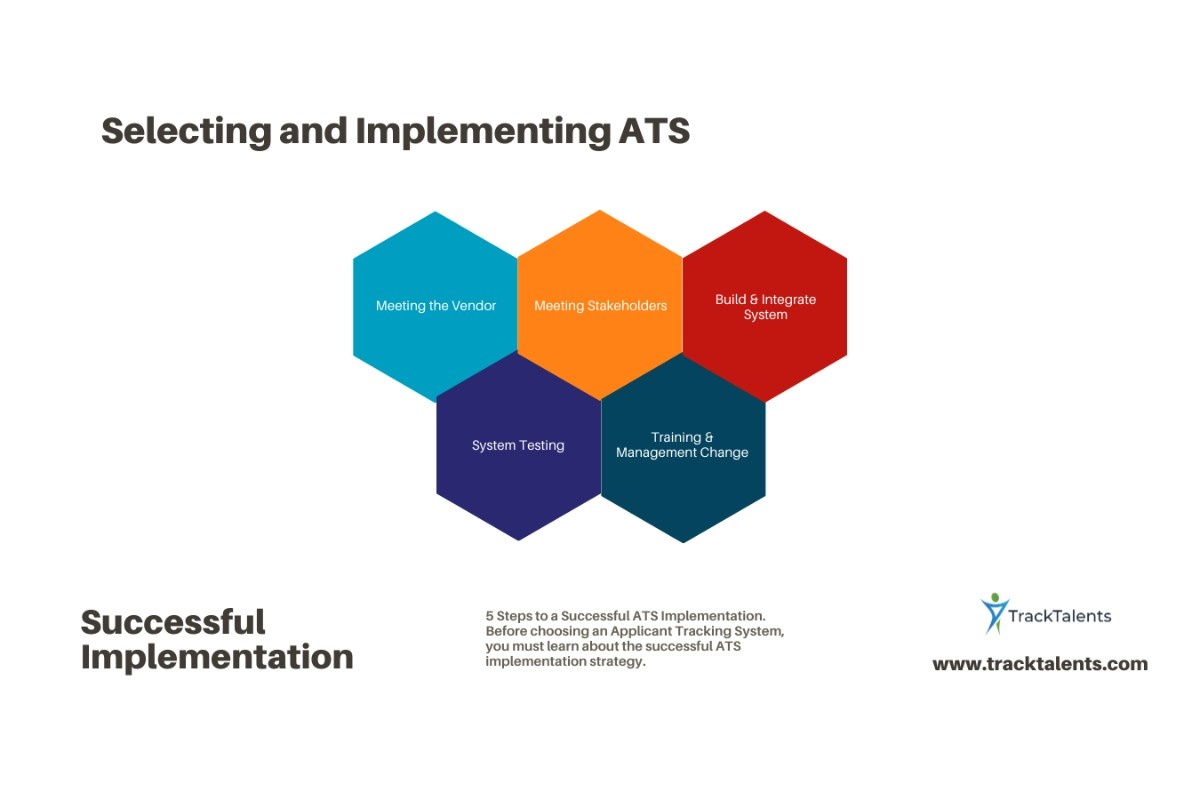
What Employers Should Test Before Choosing an ATS

A polished demonstration may show that a feature exists without revealing whether it works well in a real recruitment environment. Employers should test the system with representative jobs, resumes, users and approval stages.
The evaluation should cover multiple practical areas.

Recreate a complete vacancy.

Set up a genuine hiring workflow from job approval to offer. This exposes unnecessary steps, permission problems and configuration limits that may not appear in a standard demonstration.

Apply from a real mobile device.

Candidates should be able to find the vacancy, complete the essential fields, upload a resume, and receive confirmation without needless friction. A lengthy or repetitive application process can discourage suitable candidates before their information even reaches the ATS.

Test different resume formats.

Use realistic resumes from the roles the organization normally recruits for. Check whether the parser places job titles, employment dates, education, and contact details in the correct fields.

Review search and screening controls.

Confirm whether recruiters can understand why a candidate appears in—or is absent from—a result. Automated ranking should be transparent enough for the hiring team to review rather than accept unquestioningly.

Trigger every automated message.

Test confirmations, reminders, interview invitations and rejection emails. Verify the wording, sender details, timing and conditions that activate each message.

Examine integrations and data movement.

A stated integration does not guarantee that every required field transfers correctly. Employers should test data mapping, duplicate handling, error alerts, and the process for correcting failed transfers.

Define reporting terms

Measures such as time to hire, time to fill, and source effectiveness can be calculated in different ways. Agree on the definitions before relying on the resulting reports.

Review access, retention and export options.

Confirm who can see candidate information, how permissions are administered, whether retention rules can be configured, and how records can be exported if the employer changes systems.

What Job Seekers Should Know About ATS Screening

Candidates do not need to write for software at the expense of human readers. The more reliable approach is to present relevant experience in a clear format that both recruiters and parsing systems can understand.
Useful practices include:
  • Tailor the resume to the genuine requirements of the position.
  • Use recognized job titles, skills and qualifications where they accurately describe the background.
  • Organize information under familiar headings such as Professional Experience, Education and Skills.
  • Avoid placing essential information only inside images or decorative graphics.
  • State relevant experience clearly instead of relying on vague claims
  • Answer application questions accurately
  • Follow the employer’s instructions for document type and required information.
  • Avoid keyword stuffing or adding skills that cannot be demonstrated.
A resume can pass through a parser and still fail to persuade a recruiter. Clear evidence of relevant work, sound career positioning and concrete correspondence with the vacancy remain more important than repeating isolated keywords.

Use the ATS to Strengthen Hiring Decisions

An applicant tracking system can give recruitment teams a more orderly way to publish jobs, collect applications, review candidates, coordinate interviews and examine hiring activity. Its value comes from making the process visible and manageable.
The software cannot compensate for unclear requirements, inconsistent interviews, poor communication or unexamined screening rules. Employers gain the most from an ATS when they first define a credible recruitment process and then configure the system to administer it faithfully. Before implementing an ATS, HR teams should review and document their current hiring process, identifying any gaps or bottlenecks that could be addressed. For example, formulating clear job descriptions and standardizing interview questions can create a stronger foundation so the ATS supports rather than reinforces old inefficiencies.
The right question is not whether an ATS can automate more work. It is whether the system gives recruiters the information, controls, and time needed to make better-supported hiring decisions.

Explore More Blogs on ATS

Explore Best ATS Software for Modern Recruitment 

ATS

Explore Best ATS Software for Modern Recruitment 

The best ATS software is not always the platform with the longest feature list. It is the one that matches…

What an Applicant Tracking System Really Means in 2026

ATS

What an Applicant Tracking System Really Means in 2026

Recruitment has become harder to manage, not because companies lack candidates, but because they receive too many applications and not…

What Recruiters Should Check Before Buying Best ATS Software

ATS

What Recruiters Should Check Before Buying Best ATS Software

Recruiters are no longer choosing applicant tracking software based on the longest feature list. Most platforms now promise automation, AI,…

Leave a Reply

Your email address will not be published. Required fields are marked *