
An applicant tracking system (ATS) helps recruiters manage jobs, applications, candidate records, and hiring activity in one place. Employers use it to hire for their own teams, while agencies use it to recruit for several clients and often handle placements and assignments too.
This difference shapes most buying decisions. Enterprises often need detailed approvals, permissions for different business units, support for internal mobility, and integration with HR systems. Agencies usually focus more on candidate search, managing client relationships, quick submissions, redeployment, and tracking open job orders.
An ATS can organize both models, but it cannot fix unclear job requirements, weak screening criteria, or inconsistent recruiter follow-up. Its value depends on how well the workflow matches the organization’s actual recruiting process.
What an Applicant Tracking System Actually Does
An ATS mainly tracks how applicants move through each step of the hiring process. Depending on the system, it can also handle approvals, post job openings, collect applications, read resumes, schedule interviews, send updates, and transfer successful candidates’ data to an HR system. The Society for Human Resource Management says an ATS creates a database of candidate information and tracks applicants through the recruitment pipeline.
This is more accurate than saying an ATS automatically finds the best person. Some systems can search, filter, recommend, or rank applicants, but their results depend on the data and rules they use. A resume parser could misread a document. A keyword search could miss someone who uses different words. A screening question might rule out a good candidate if the requirement is unclear.
An ATS brings recruitment information together and keeps the process organized, but it cannot make sound hiring decisions on its own. Recruiters and hiring managers must still identify the evidence that matters, consider each candidate’s experience in context, and ensure every application receives a fair and thoughtful review.
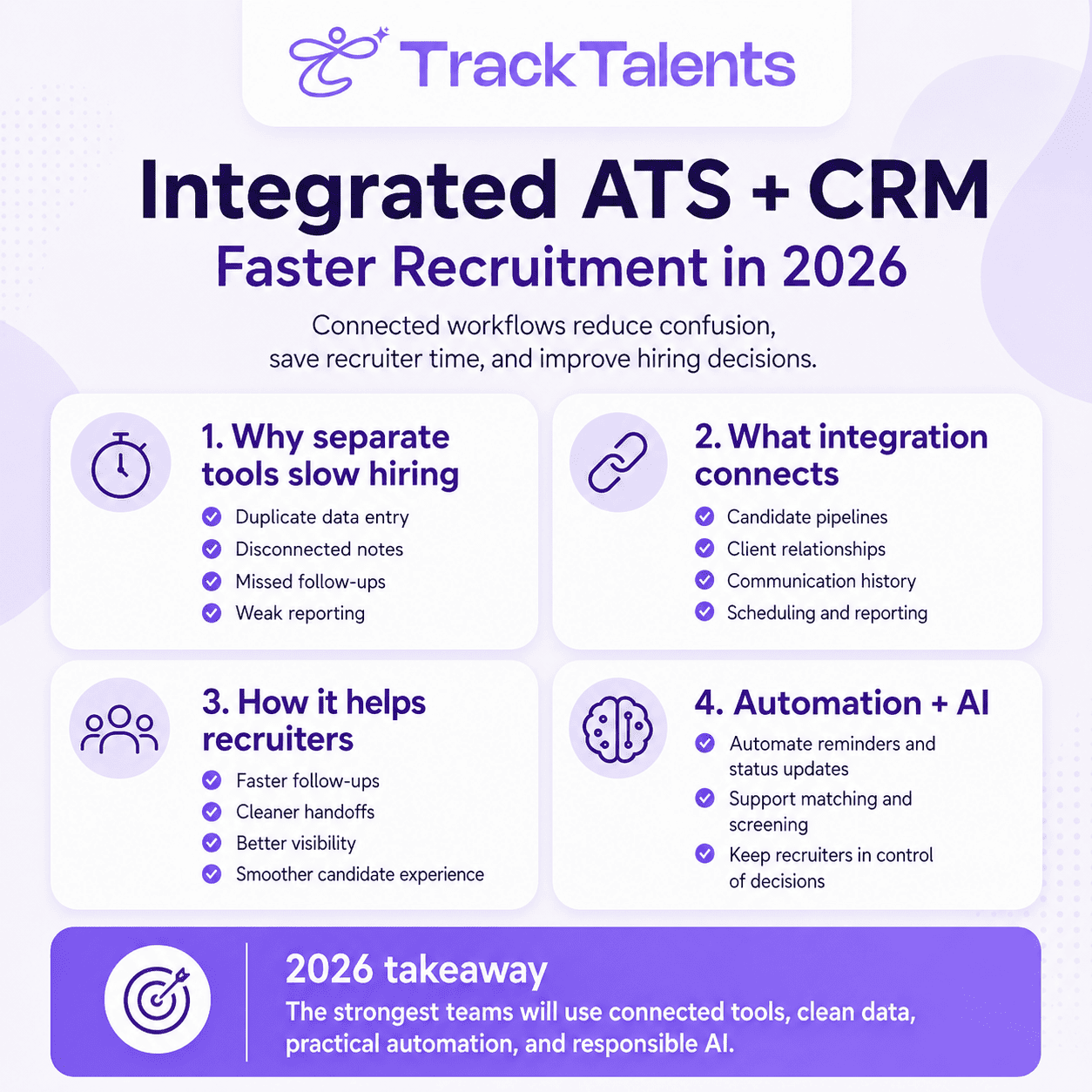
An ATS is not always the same as a recruitment customer relationship management system (CRM). An ATS usually focuses on job openings and applications. A recruitment CRM manages longer-term relationships with potential candidates, past applicants, clients, and business contacts. These functions often overlap, and agency platforms usually combine them. Workday explains that an ATS manages the hiring process, while CRM features help build relationships over time.
Enterprise Recruitment Depends on Control Across a Complex Organization
Large employers need to keep decisions, approvals, and handovers consistent across departments, locations, hiring managers, and specialist teams.
Requisition Governance Comes Before Candidate Tracking
Enterprise hiring starts before a job is posted. A new role might need approval for headcount, budget, level, location, and pay. The ATS should send the request to the right people and keep track of any changes.
If no one clearly owns the process, teams might create duplicate job requests, use different job descriptions, or report the same opening in different ways. Setting up approval paths and standard fields helps, but only after the organization agrees on the process.
Several People Need to Work From the Same Candidate Record
Corporate hiring frequently involves recruiters, hiring managers, interviewers, HR partners, and onboarding teams. The ATS should make it clear what needs to happen next, who is responsible, and what has already been done.
Access should reflect each person’s role in the hiring process. An interviewer may need the candidate’s resume and evaluation form, but there is usually no reason to share salary discussions or background-check information with them.
The quality of interview feedback matters just as much. A comment such as “good candidate” does not explain why someone should progress. If the discussion happens outside the ATS, the system records the decision but not the evidence behind it. Evaluation forms should therefore focus on the role’s requirements and prompt interviewers to provide specific, job-related observations.
Internal and External Hiring Must Remain Distinguishable
Enterprises might recruit using public job boards, their own careers site, employee referrals, campus programs, agencies, and direct sourcing. They may also look at current employees through internal mobility programs.
An ATS can bring these channels together and record where each application comes from. This allows the organization to see which channels lead to qualified applicants, interviews, and hires instead of merely counting applications. Source data is only useful when everyone follows the same tracking rules.
Internal candidates may need different permissions, communications, and transfer steps. Treating them like external applicants can expose information unnecessarily or create duplicate records in the HR system.
Integrations Should Reduce Work, Not Create More
An enterprise ATS often connects with the company’s careers site, job boards, calendars, assessment tools, background-check providers, onboarding platform, and HR system.
These connections should reduce manual work. For example, once a candidate accepts an offer, the ATS can send the required details to the onboarding system. This saves the HR team from entering the same information again.
However, an integration can also transfer incorrect details or fail unnoticed. The team should decide which system holds the official information, how users will be alerted when a transfer fails, and who is responsible for correcting the problem.
Make the Application Form Easy for Candidates to Use
The candidate application form should receive the same attention as the system used by recruiters. It should work on computers and mobile devices, provide clear instructions, and request only the information needed at that stage.
An attractive form is not necessarily easy for everyone to use. The W3C’s guidance on accessible forms recommends clear labels, helpful error messages, and confirmation after an application has been submitted.
Recruitment Agencies Need to Connect Candidates, Clients, and Placements
For a recruitment agency, hiring is also a client service. Recruiters must understand the requirement, identify suitable candidates, confirm their interest, obtain permission to share their profiles where necessary, communicate client feedback, and track each submission through to placement or assignment.
A Client Job Order Needs More Than a Job Description
The ATS should capture the client’s contact details, location, type of assignment, required qualifications, pay or bill rate details where applicable, submission deadline, interview process, and the person responsible for the job order.
If these details remain in email threads, recruiters may work from different versions of the requirement. A clear job-order record provides the team with a reliable reference and improves reporting.
Candidate Relationships Go Beyond One Application
An agency’s database might include sourced prospects, past placements, referrals, contractors nearing the end of an assignment, and candidates considered for earlier roles. Agency platforms often combine ATS and CRM functions.
For example, Bullhorn describes its agency platform as an integrated ATS and CRM covering sourcing, engagement, placement, and relationship management. This example illustrates the operating model rather than recommending one product for every agency.
Search and talent rediscovery are especially important. Recruiters should be able to find candidates by skills, location, availability, and work history without making duplicate records. Since search results can be outdated, agencies need to check current details before sharing a profile.
Submissions Require a Traceable Chain of Communication
Agency recruitment involves several handoffs: from recruiter to candidate, recruiter to client, client to agency, and agency back to candidate. The system should record the candidate’s interest, the version of the resume submitted, the role and client involved, the submission date, client feedback, and the next agreed step.
This history can reduce disputes about candidate ownership, although the ATS record does not replace clear contractual terms.
Bulk email can be useful when the message is relevant to a specific group, but a large database does not justify contacting everyone. Agencies still need to segment candidates, follow applicable communication rules, control message frequency, and manage opt-outs. Automated messages should stop when a candidate replies, withdraws, or needs personal contact.
Permanent, Contract, and Temporary Staffing Require Different Workflows
For contract and temporary staffing, the work continues after a candidate accepts the role. Agencies may need to track assignment dates, compliance documents, extensions, timesheets, payroll, and client billing. Some recruitment platforms include these functions, while others connect with separate workforce management, payroll, or finance systems.
A platform designed mainly for permanent recruitment may not provide the controls needed for shift-based staffing, contractor extensions, or redeployment. At the same time, an agency focused exclusively on permanent placements could end up paying for operational features it does not need.
Agencies that receive job requirements through a vendor management system (VMS) should also examine how information moves between the VMS and ATS. If recruiters must repeatedly copy job orders, candidate submissions, and status updates from one system to another, the process creates extra work and increases the risk of conflicting records.
Enterprise and Recruitment Agency ATS Requirements Compared
These differences provide a practical comparison rather than strict product categories. Many ATS platforms serve both employers and agencies, but their suitability depends on the workflows, relationships, and hiring activities they must handle.
An agency might select a corporate ATS and later discover that it cannot adequately manage client contacts, candidate submissions, or placements. An enterprise could choose an agency-focused platform with strong search and communication features but limited requisition controls or HR system integration.
The number of features matters less than whether the system supports the organization’s actual recruitment process.
Automation Saves Administrative Time Only When the Rules Are Sound
Good ATS automation is usually clear and specific. It can send an application receipt, remind interviewers to give feedback, alert recruiters when a candidate stays in one stage too long, or create an onboarding task after an offer is accepted. These actions save time without letting the system make hiring decisions.
Problems happen when teams automate a process that is not clear. For example, a rejection message might go to a candidate before a recruiter reviews an exception. An interview reminder might keep going out after the appointment is canceled. A required screening answer could reject a qualified person if the question is too broad.
AI-assisted search, matching, and scoring require additional scrutiny. Employers and agencies should know what data the tool uses, what the output means, how accuracy is tested, and how a person can review or challenge the result.
The UK Information Commissioner’s Office advises buyers of AI recruitment tools to examine fairness, transparency, data minimization, and the way providers process candidate information in its guidance on AI-assisted recruitment. In the United States, the EEOC and Department of Justice have warned that algorithmic hiring tools can screen out people with disabilities and that employers need a process for reasonable accommodations.
These concerns are not limited to fully automated rejections. A recommendation can influence a recruiter even when a person makes the final decision. Organizations should test results against job-related criteria, track who moves through the process, record exceptions, and provide a clear way for people to review decisions.
Keep ATS Records Updated Before Trusting the Reports
An ATS creates reports from the information entered by recruiters. If that information is incomplete or outdated, the report will also be wrong.
For example, a candidate may withdraw from an interview. If the recruiter forgets to update the status, the ATS will continue to show that person as an active candidate waiting for an interview. This gives managers an incorrect view of the hiring pipeline.
To prevent this, everyone should follow the same rules when updating candidate records. The team should agree on:
- When an applicant can be marked as qualified
- What each recruitment stage means
- When a candidate’s status should be changed
- How the source of an application should be recorded
- Which reasons should be selected when someone is rejected or withdraws
- Who should close duplicate, canceled, or inactive records
Once records are updated correctly, company HR teams can see how long job approvals take, where candidates experience delays, how many applicants reach the interview stage, and how many accept or decline offers.
Recruitment agencies can also check how many candidate submissions lead to interviews, how many interviews result in placements, which jobs remain unfilled, and which contractor assignments are approaching their end dates.
The meaning of each figure must be clear. For example, one agency may calculate its placement ratio by comparing placements with open jobs. Another may compare placements with the number of candidates submitted. These figures cannot be compared unless both agencies use the same calculation.
Faster hiring does not always mean better hiring. Some roles take longer because suitable candidates are difficult to find, while other delays may come from clients or hiring managers. Recruitment reports should therefore be reviewed alongside the circumstances of each vacancy.
Set Clear Rules for Candidate Data
An ATS may contain resumes, emails, interview feedback, screening results, and other personal information. Before collecting all this data, the employer or agency should be clear about what it needs and how long it has a valid reason to keep it. Not everyone involved in recruitment needs access to every part of a candidate’s record.
Responsibility can become less clear when information passes between an agency, employer, client, and software provider. The privacy notice and contractual terms should explain who receives the data, what they use it for, and what happens to it when the recruitment process ends.
In the UK, the ICO’s recruitment and selection guidance explains the data-protection duties of employers and recruiters. It covers matters such as collecting only relevant information, keeping records accurate, restricting access, and setting retention periods. Organizations recruiting in other countries should check the laws that apply there rather than assuming one policy will cover every location.
Access should be limited according to the person’s role. Important actions should be recorded, old records should be reviewed and deleted when they are no longer required, and backups should be tested. If a candidate’s information is shared with a client or transferred to another system, the team should be able to confirm exactly what was sent and why.
Select an ATS by Testing the Work, Not Watching a Feature Tour
The buying process should start with a review of the current workflow. SHRM’s guidance on buying an ATS recommends examining the existing recruitment process before selecting software, since technology cannot fix a weak process.
Map a small number of representative hiring scenarios from beginning to end. For an enterprise, these might include an approved professional vacancy, high-volume hiring, an internal candidate, and an agency submission. A staffing firm might include a retained search, a contingent permanent placement, a contract assignment, and a requirement received through a VMS.
Use those scenarios to test:
- Whether stages, approvals, and permissions can reflect the real process
- Whether search results can be explained and refined
- Whether duplicate candidates and applications are handled safely
- Whether emails, reminders, and status changes stop at the correct point
- Whether candidate and client histories remain understandable
- Whether required integrations transfer the correct fields and report failures
- Whether reports can reproduce agreed operational definitions
- Whether users can export the necessary data in a usable format
- Whether the candidate application works on mobile devices and with assistive technology
- Whether implementation, migration, training, and ongoing support are realistic
Product demonstrations should use real data and show exceptions, not just the vendor’s ideal process. Ask what happens if an approver is away, a candidate applies twice, an integration fails, a recruiter changes ownership, or a record needs to be deleted. These situations show more about how the system really works than a polished dashboard does.
Make the ATS a Managed Recruitment System After Launch
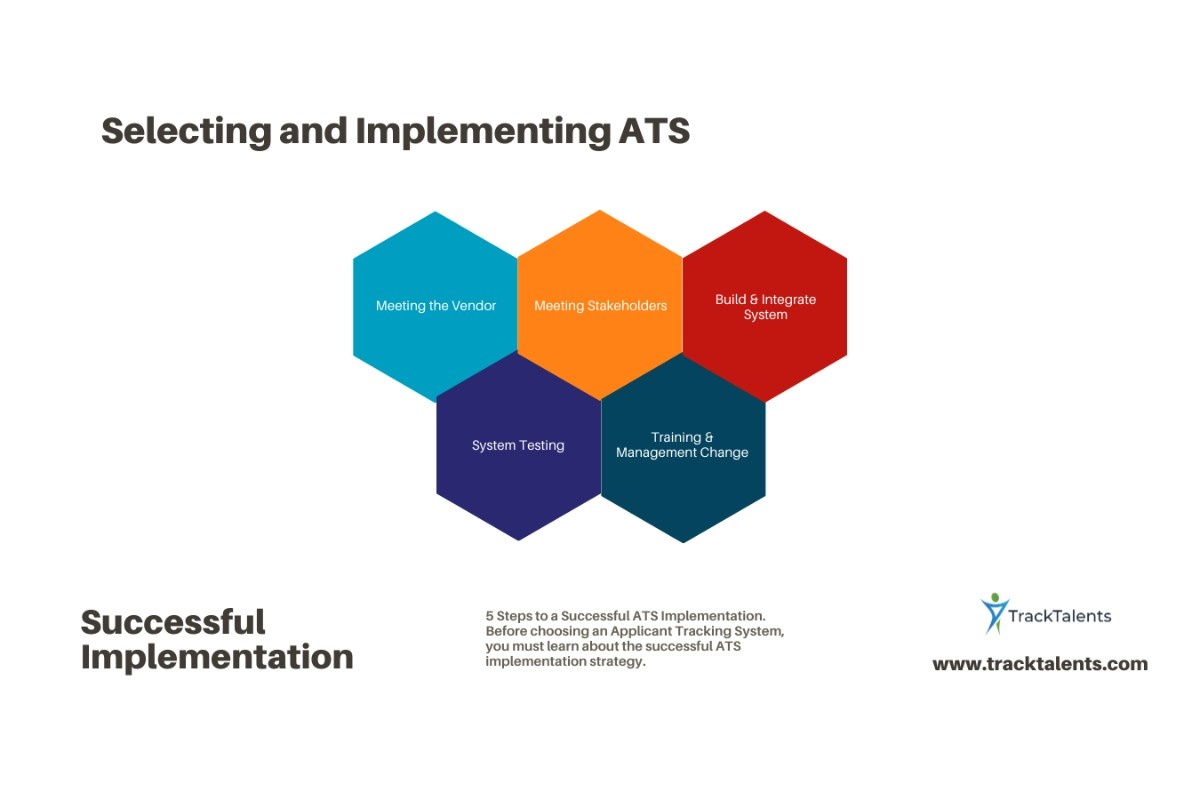
Implementation is not finished when the software goes live. Assign someone to own workflow decisions, data standards, permissions, integrations, and release changes. Recruiters need training on their regular tasks, while administrators need more detailed guidance on setup and reporting.
Review the system using user feedback and records. Watch for stages that recruiters skip, fields filled with meaningless defaults, automations that send unnecessary messages, and reports that teams cannot match up. Complaints from candidates, recruiter workarounds, and hiring-manager delays can show problems that a technical check might miss.
Changes should be managed carefully. Keep a record of why a workflow, template, or field was changed, who approved it, and how it was tested. Without this, the ATS can end up with duplicate stages, conflicting templates, and unused fields that make recruitment confusing.
An effective applicant tracking system gives each organization the control its hiring model requires. Enterprises usually need consistent approvals, collaboration, and integration across a complex internal structure. Recruitment agencies need those fundamentals along with clear visibility into clients, submissions, and placements.
The right choice is a platform that represents these responsibilities clearly, reduces avoidable administration, and keeps people accountable for the decisions that affect candidates.